


There's something about handmade things that machine-made versions just can't copy. A little unevenness here, a slightly tighter loop there, the sense that someone's hands actually moved through the whole process. That's true whether you're talking about a crochet piece made for a home altar or a woven cap that carries regional identity. This post looks at a few such handmade items, each different in purpose, but all connected by the thread (sometimes literally) of being made by hand.
Why Crochet Has Found a Place in Pooja and Home Decor
Crochet isn't something most people associate with Himalayan craft history specifically, and we're not going to pretend it is. It's a technique that's been adopted widely across Indian homes for decorative and devotional items, and over time it has become part of how many households, including pahadi ones, dress up their pooja corners and living spaces. You'll find it in thal covers, in small idol outfits, in wall hangings. It's flexible, it's soft, and it lets the maker build in detail, like a ruffled border or a floral edge, without needing heavy equipment.
Dressing Laddu Gopal in Handmade Outfits
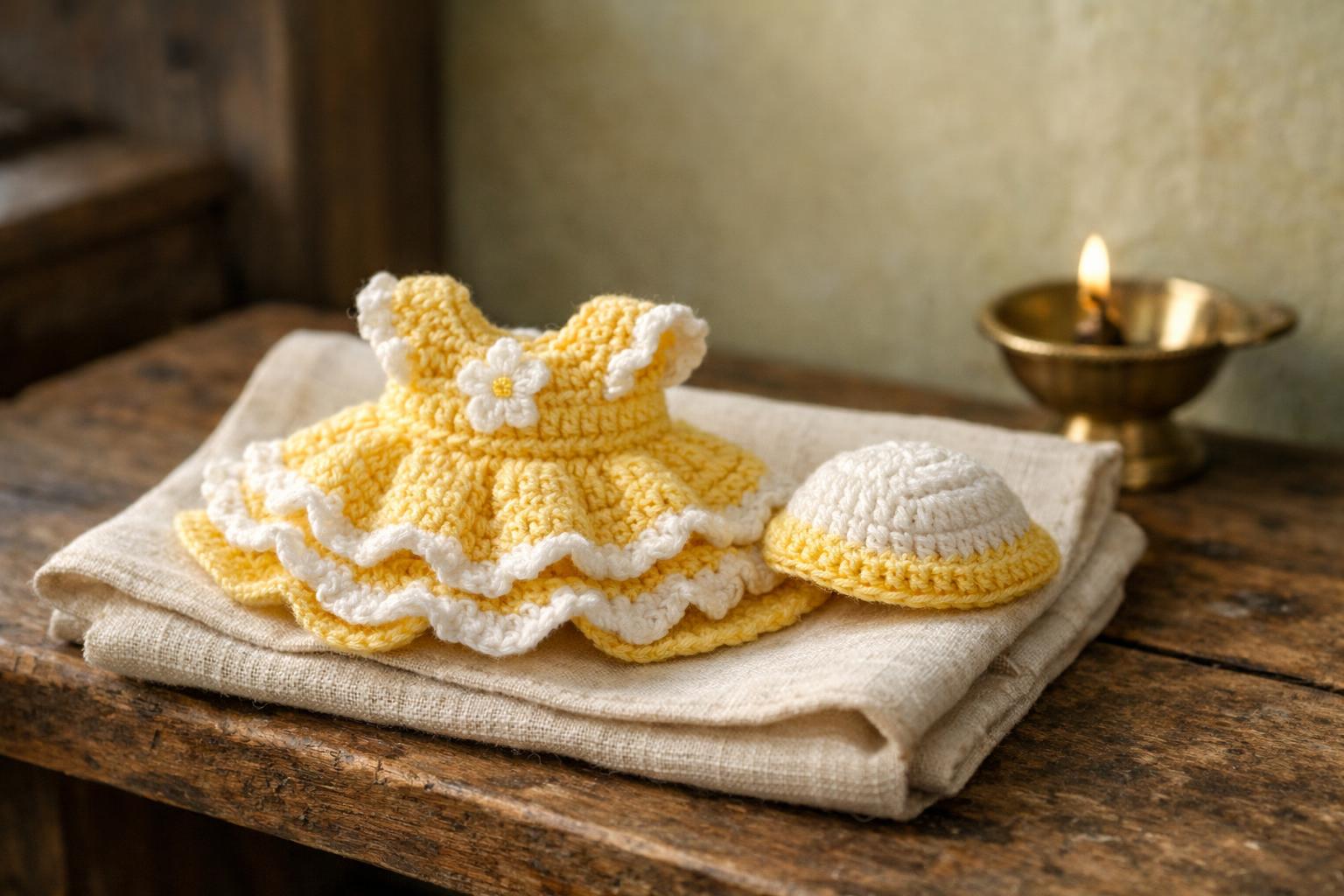
Many devotees who keep a Laddu Gopal or Kanha Ji idol at home like to change the idol's outfit regularly, sometimes daily, sometimes for specific occasions. It's a common devotional practice in many households, and small clothing sets made for these idols are part of that routine. The yellow ruffled dress set described here is made specifically for Size 0 number idols, which means it's meant for very small murtis. It comes as a peethambara-style outfit, a soft ruffled yellow dress with white detailing, paired with a matching white cap that has a yellow border. It's lightweight by design, which makes sense for something meant to be put on and taken off often, whether for daily shringar or for a special festival day. Nothing about it is stiff or elaborate in construction, it's meant to be gentle on a small idol and easy to use.
Shop This Look


The Uttarakhandi Maroon Topi and What It Represents
The traditional maroon cap in this collection is a different kind of handmade object altogether, not devotional, but cultural. It's described as representing the culture of Uttarakhand, spanning both the Garhwal and Kumaon regions, and you can see why in the design itself. The base is maroon, woven through with multicolored patterns, and finished with a brass emblem at the front. It measures 20 cm in diameter and 5 cm in height, a size meant to sit comfortably on the head rather than perch awkwardly. Caps like this one show up at weddings, cultural events, and festivals in the hills, and some people wear them as part of daily dress too. We won't claim a specific century-old origin story for this particular cap style since that's not something we can verify, but its presence at Uttarakhandi cultural events is well established and the craftsmanship in the weave speaks for itself.
Crochet Thal Covers for Everyday Pooja Use
A pooja thali gets used constantly, for aarti, for daily rituals, for festivals, and it tends to show wear if it's left uncovered or unprotected. A crochet thal cover solves a small but real problem here. This particular one has a soft purple base with a floral border worked into the edge, made from yarn described as high-quality, which keeps it lightweight and durable enough for regular use. It's sized for a small mandir thali, so it won't work for an oversized plate, but for the kind of compact thali most home temples use, it fits the job well. Being handmade, it has a bit of texture and softness that a plain plastic or steel cover doesn't offer, and it's reusable, so you're not replacing it every season.
Evil Eye Wall Hangings as a Home Decor Addition
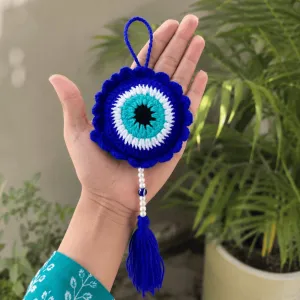
The evil eye or nazar battu motif has become a popular piece of home decor well beyond its original cultural contexts, showing up in entryways, cars, offices, and living rooms. This particular wall hanging is made from premium crochet yarn in blue, white, black, and aqua, the classic evil eye palette, and finished with pearl beads and a soft tassel at the bottom. It measures 25 cm in length, a size suited for a doorway, a shelf, or a small wall nook rather than a large statement piece. Each one is handcrafted, so you'll notice small individual differences between pieces, which is part of what makes handmade decor feel less uniform and a little more personal than something mass produced.
None of these four items share a single origin story or a single use case, and that's sort of the point. One dresses a small idol, one represents a regional cultural identity, one protects a pooja thali, and one adds a decorative touch meant to feel a little protective too. What ties them together is the handmade part, the fact that someone sat down and worked yarn or thread into something specific, meant for a specific size, a specific occasion, a specific corner of a home. That's worth paying attention to, even in small decorative or devotional objects we might otherwise overlook.