



If you have ever looked closely at a piece of Aipan art, you know it feels different from a regular painting. There is a strange, comforting rhythm to the lines, dots, and geometric grids.
Growing up in or around the hills of Uttarakhand, you get used to seeing these beautiful brick-red and white patterns on doorsteps during Diwali, weddings, or local pujas. But Aipan isn't just about making a threshold look pretty.
Every single line drawn by a Kumaoni woman’s fingers is actually a silent prayer. It’s a visual language where every shape has a specific job—whether that’s inviting wealth, celebrating a birth, or asking for a child's bright future.
Let’s break down the actual stories and meanings behind the most popular Aipan symbols and designs you see today.
1. The Lakshmi Footprints (Pagalya)
This is probably the most loved and recognized symbol in Aipan. You will see these tiny, stylized footprints painted all over the floor during Diwali.
Growing up in or around the hills of Uttarakhand, you get used to seeing these beautiful brick-red and white patterns on doorsteps during Diwali, weddings, or local pujas. But Aipan isn't just about making a threshold look pretty.
Every single line drawn by a Kumaoni woman’s fingers is actually a silent prayer. It’s a visual language where every shape has a specific job—whether that’s inviting wealth, celebrating a birth, or asking for a child's bright future.
Let’s break down the actual stories and meanings behind the most popular Aipan symbols and designs you see today.
1. The Lakshmi Footprints (Pagalya)
This is probably the most loved and recognized symbol in Aipan. You will see these tiny, stylized footprints painted all over the floor during Diwali.
- The Meaning: They represent the footsteps of Goddess Lakshmi, the deity of wealth and good fortune.
- The Placement Detail: If you look closely at how a traditional household paints them, the footprints never point outward. They always start from the main entrance of the house and move inward, leading all the way to the temple or the kitchen locker. It is a literal way of guiding wealth and abundance directly into the heart of the home.
2. Vasudhara (The Flowing Lines)
Walk up to any traditional Kumaoni doorstep during a festival, and you will see a series of vertical white lines running along the base of the walls and the sides of the door. This is called Vasudhara.
Walk up to any traditional Kumaoni doorstep during a festival, and you will see a series of vertical white lines running along the base of the walls and the sides of the door. This is called Vasudhara.
- The Meaning: Vasu means wealth, and Dhara means a continuous stream or flow.
- The Structure: Vasudhara is drawn in odd numbers—usually 5, 7, or 9 lines. First, a thick layer of red Geru clay is applied, and then the white rice paste lines are drawn smoothly from top to bottom. It acts as a protective shield for the house, ensuring that food, health, and happiness never stop flowing into the family.
3. Saraswati Chowk
In a culture that deeply respects education and wisdom, the Saraswati Chowk holds a very special place. It is traditionally painted when a young child in the family is about to start their formal education (a ritual called Akshar Arambha).
In a culture that deeply respects education and wisdom, the Saraswati Chowk holds a very special place. It is traditionally painted when a young child in the family is about to start their formal education (a ritual called Akshar Arambha).
- The Meaning: It is dedicated to Goddess Saraswati, the deity of knowledge, arts, and music.
- The Design: Unlike the free-flowing lines of other motifs, this one is highly mathematical. It uses a perfect star pattern built inside a grid of squares. It symbolizes a structured mind, focus, and clarity of thought for the student.
4. The Magic of Dots (The Bindu)
You will notice that no Aipan design is ever left with just bare lines. There are always tiny white dots placed inside the squares, at the intersections, or trailing at the ends of curves.
You will notice that no Aipan design is ever left with just bare lines. There are always tiny white dots placed inside the squares, at the intersections, or trailing at the ends of curves.
- The Meaning: In Himalayan philosophy, a bare line is considered incomplete and is unfortunately associated with times of mourning. Adding dots is what brings the painting to life.
- The Center Dot: The single dot at the very center of an Aipan design represents the Bindu—the center of the universe, or the supreme source of energy from which all life emerges. When an artisan places the final dots, it means the prayer is complete, and the home is filled with life.
5. Shiv Peeth or Chowki
This design is created during major religious ceremonies, especially during the holy month of Shravan or during special house-warming pujas (Grah Pravesh).
This design is created during major religious ceremonies, especially during the holy month of Shravan or during special house-warming pujas (Grah Pravesh).
- The Meaning: It is dedicated to Lord Shiva, who is deeply revered across the Himalayas.
- The Design: It features a bold, interlocking pattern of squares and triangles that create a protective seat (Peeth) for the divine energy. It is believed to ground the home, bringing stability, peace, and mental strength to the family living inside.
Why Understanding These Symbols Changes Everything
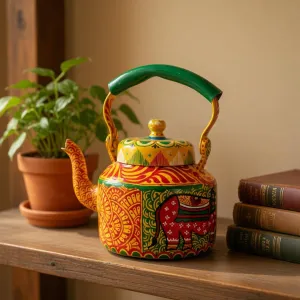
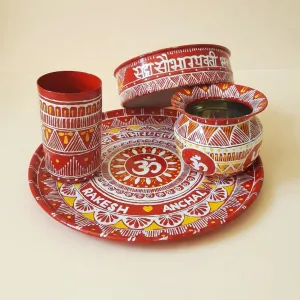
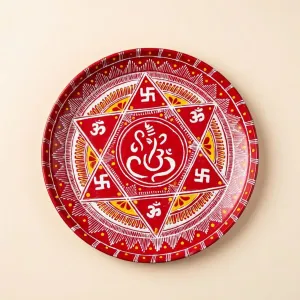
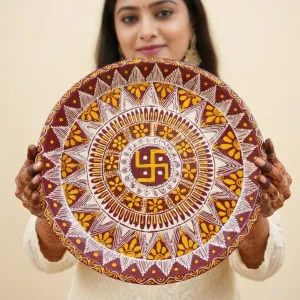
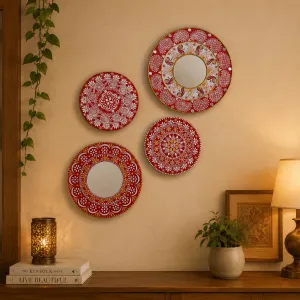
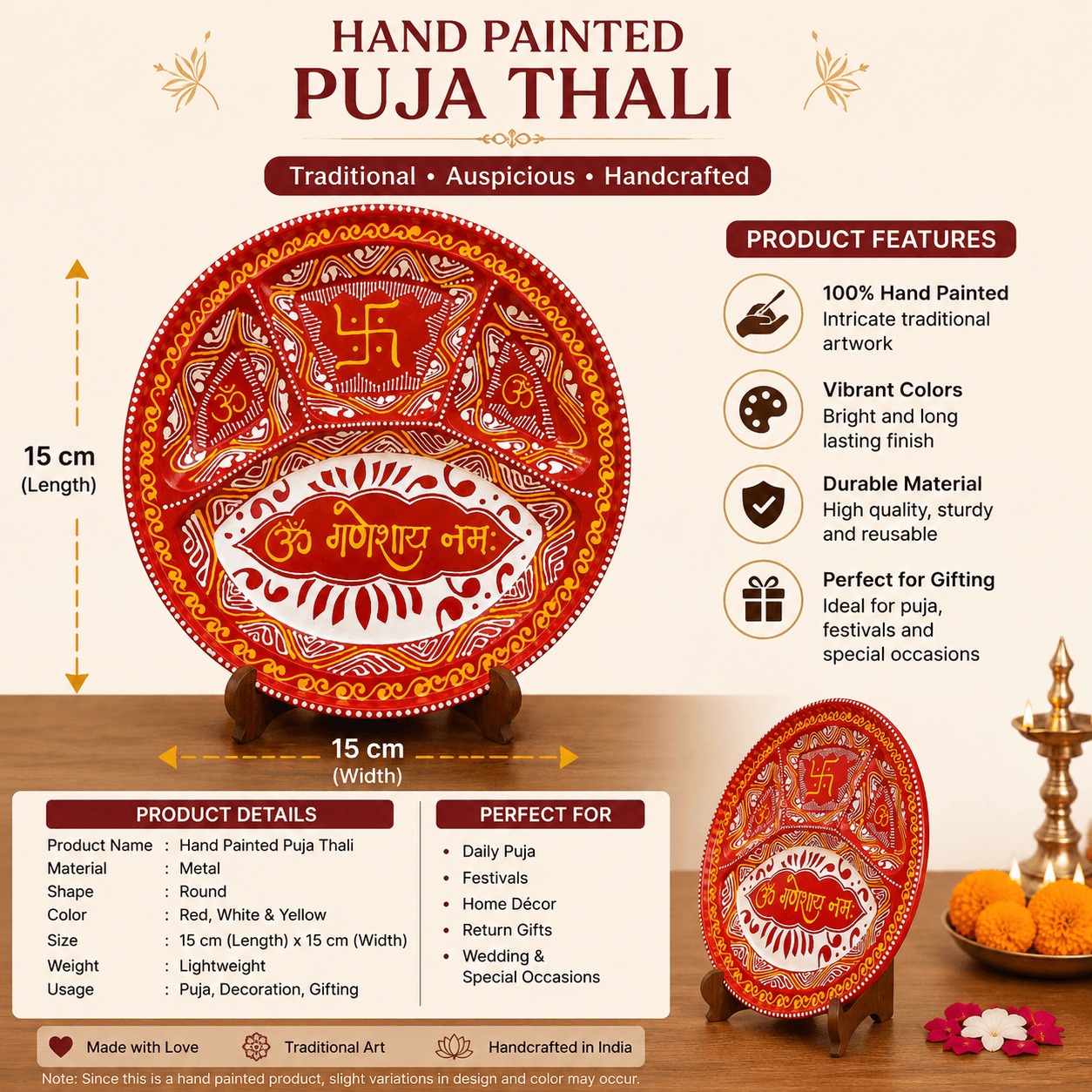
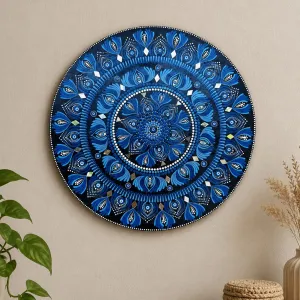
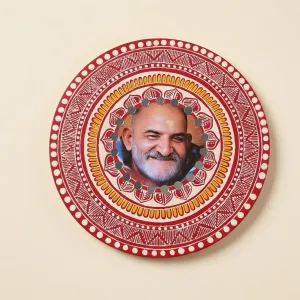
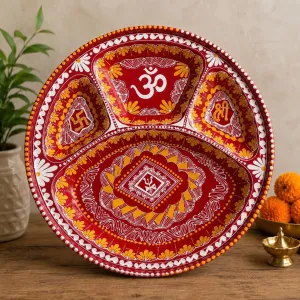
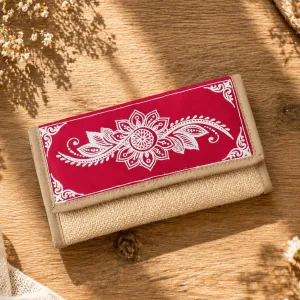
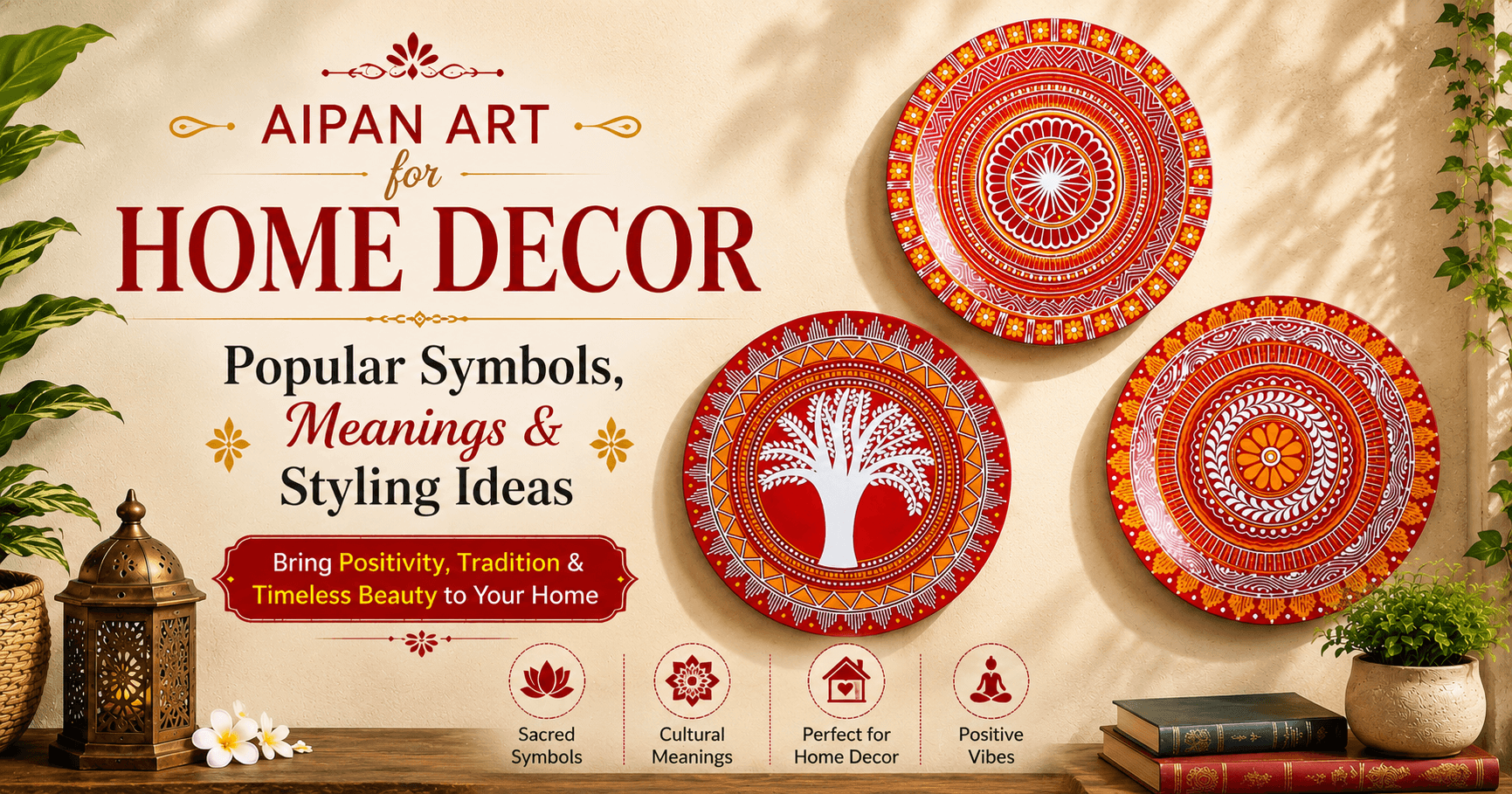
Today, Aipan is moving from mud floors onto wooden wall clocks, canvas boards, and contemporary home decor. But even on a modern product, these symbols carry the exact same ancient blessings.
When you hang an Aipan-inspired piece in your living room or gift an Aipan coaster to a friend, you aren't just buying "ethnic decor." You are carrying forward a piece of the peaceful, sacred geometry of the Kumaon hills. It’s a way of keeping a beautiful, human-centric tradition alive in a fast-moving digital world.
Today, Aipan is moving from mud floors onto wooden wall clocks, canvas boards, and contemporary home decor. But even on a modern product, these symbols carry the exact same ancient blessings.
When you hang an Aipan-inspired piece in your living room or gift an Aipan coaster to a friend, you aren't just buying "ethnic decor." You are carrying forward a piece of the peaceful, sacred geometry of the Kumaon hills. It’s a way of keeping a beautiful, human-centric tradition alive in a fast-moving digital world.