
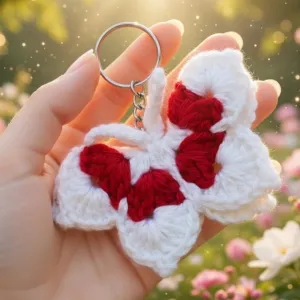


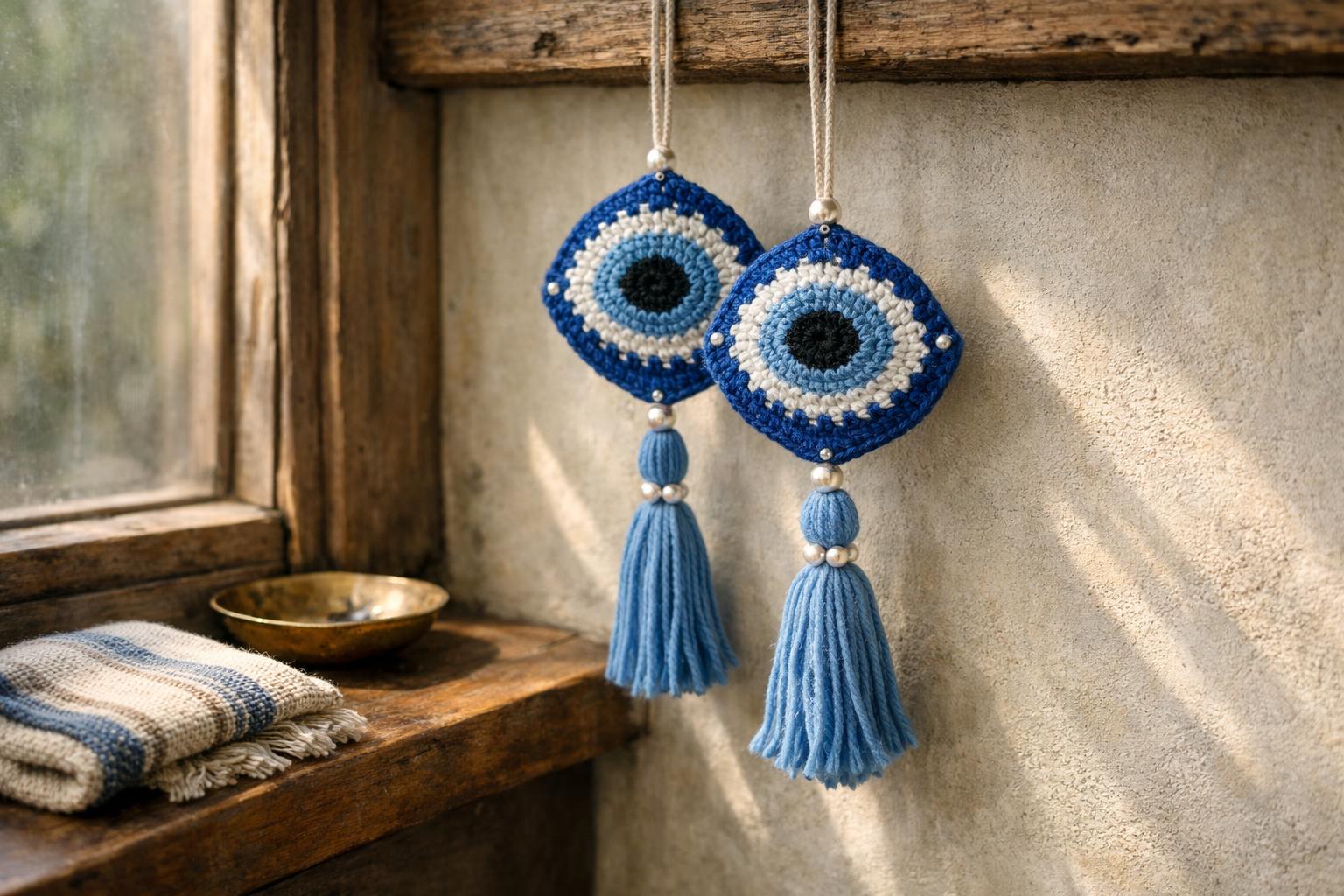
There's something about a small handmade object that makes you pause for a second longer than you would for something mass produced. Maybe it's the slightly uneven stitch here or there, or the fact that someone actually sat down and looped yarn into a shape with their hands. Crochet work has that quality. It's soft, it's forgiving of small imperfections, and it ends up in places you wouldn't expect, like your car mirror or the zip of your backpack.
What Crochet Work Actually Involves
Crochet is made with a single hook and yarn, built up stitch by stitch into whatever shape the maker has in mind, be it a flower, an animal, or a round eye-shaped charm. The pieces we're talking about here use premium cotton yarn, along with small additions like pearl beads, tassels, and metal key rings depending on what's being made. None of this is complicated machinery or factory tooling. It's closer to how you'd imagine your grandmother or an aunt working with a hook and a ball of yarn in the evening, except these particular pieces are handmade by skilled artisans as part of a small-scale, contemporary handmade craft practice rather than anything tied to a single ancient tradition.
That distinction matters. Crochet isn't generally regarded as one of the older indigenous crafts of the Himalayan region, the way weaving or woodwork might be. But over time, yarn craft and crochet work have found a place in pahadi homes and in handmade businesses that operate out of the hills, simply because yarn is accessible, the skill is teachable, and the end products are genuinely useful. So when you see a crochet piece described as handmade in a pahadi or Himalayan context, it's more honest to think of it as a contemporary handmade craft made in that setting, rather than a centuries-old heirloom technique.
The Crochet Evil Eye Hanging and What It's Meant to Do
The evil eye, often called nazar battu in Hindi, is a symbol you'll spot across a lot of different cultures and belief systems, not just one region or tradition. People hang it, wear it, or keep it near their door because of a widespread belief that it wards off negative energy or an ill-intentioned gaze. The exact history of the symbol varies depending on which culture you look at, so it's best understood as a belief carried across many communities rather than something with one fixed origin story.
This particular crochet evil eye hanging comes as a set of two, in blue, made with premium cotton yarn and finished with pearl beads and soft tassels. Each piece measures around 25 cm in total length. People hang these in cars, at home entrances, in the living room, bedroom, office, or near a window, partly for the symbolism and partly because the crochet work and tassel detailing just look nice swinging gently wherever they're placed. They're lightweight, which makes sense for something that's going to hang and move with air or motion, like on a car mirror.
Shop This Look
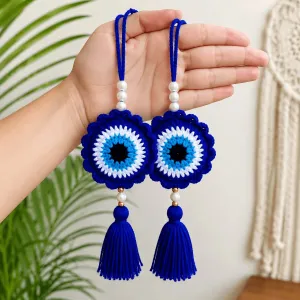 Handmade Crochet Evil Eye Hanging for Car & Home Decor | Nazar Battu Hanging | Blue | Set of 2
₹359.00
 Handmade Crochet Sunflower Keychain | Cute Floral Bag Charm & Key Ring | 10 cm
₹199.00
 Handmade Crochet Mini Duck Keychain (Cute Amigurumi Duck Charm)| 8cm
₹249.00
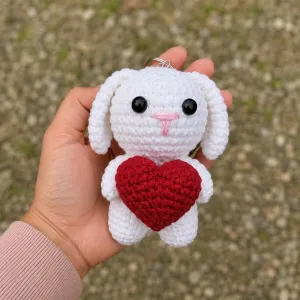 Handmade Crochet Bunny Keychain with Red Heart – 13 cm
₹349.00
Crochet Keychains as Small Everyday Accessories
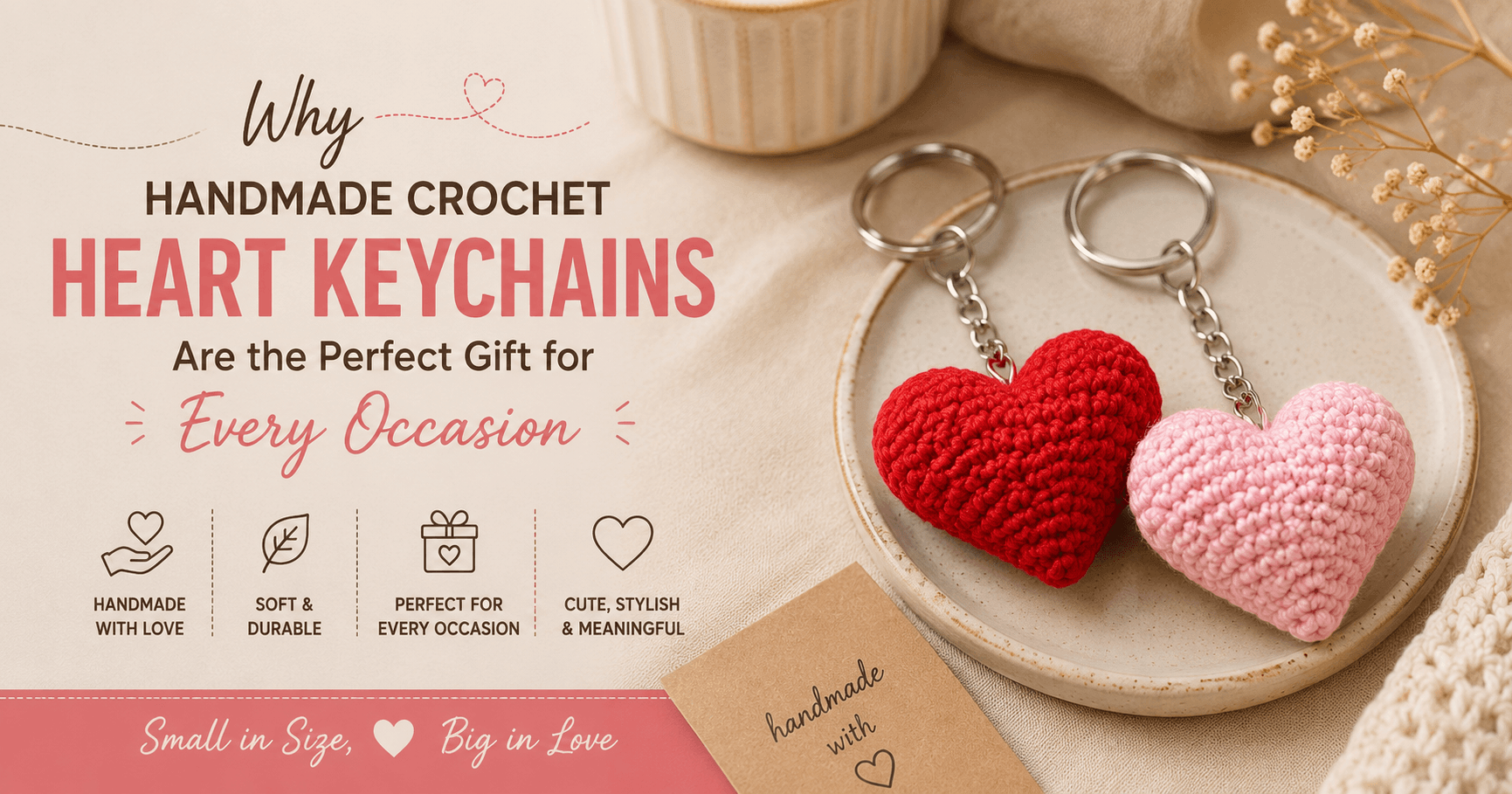
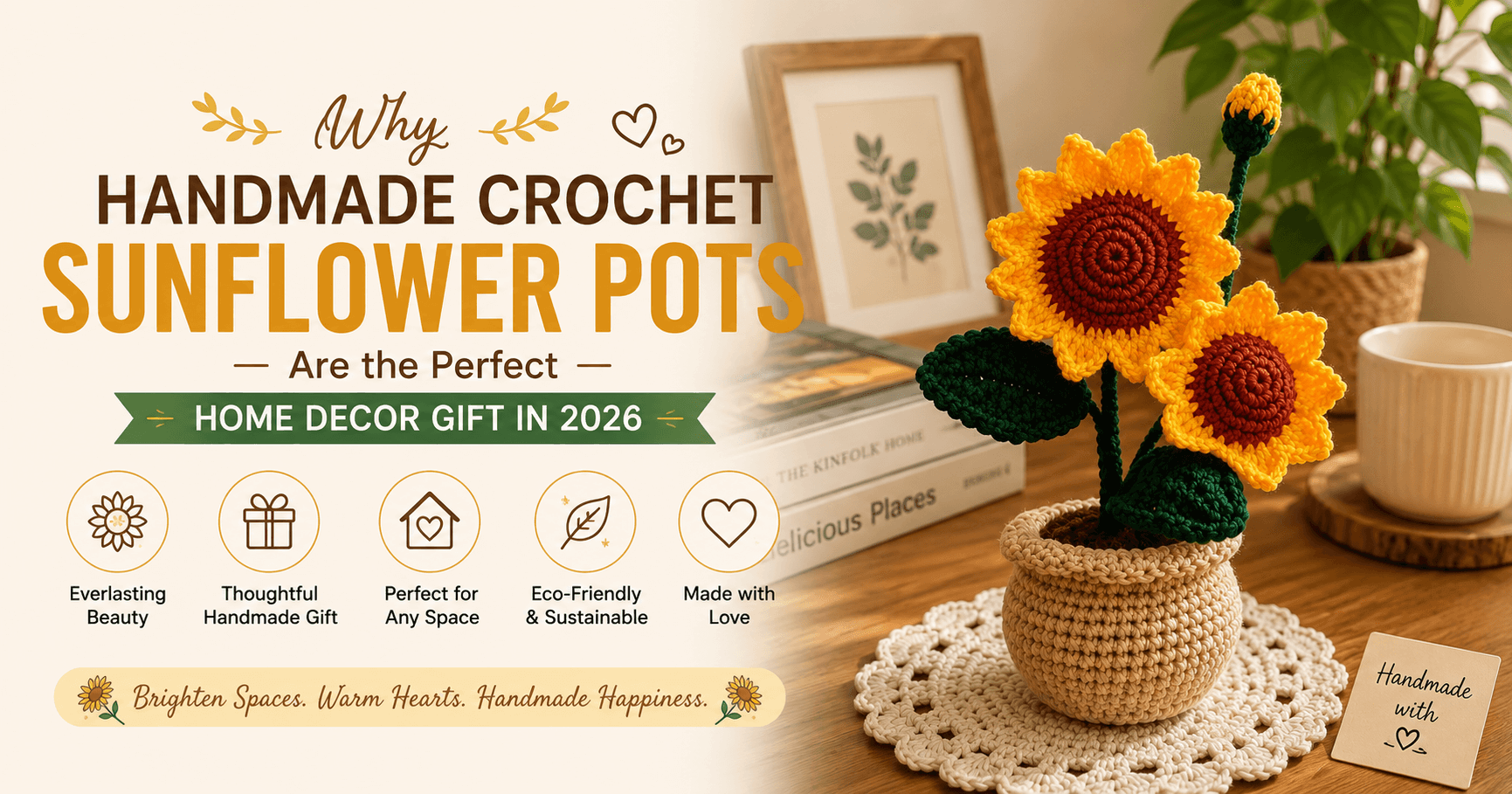
Keychains are a different kind of object altogether. They don't carry the same symbolic weight as an evil eye hanging, they're just small, cheerful, handmade accessories that attach to things you carry around daily. The sunflower keychain is a good example of that, a crochet sunflower with a green leaf, about 10 cm in size, made with premium quality yarn and finished with a durable metal key ring. It's meant for keys, handbags, backpacks, or purses, and works just as well as a small gift for a birthday or a return gift at an event.
The duck keychain is on the smaller side, around 8 cm, made from soft yarn with a pink hood and yellow detailing, giving it a mini amigurumi duck look. It's light enough to carry daily on a bag or pouch without adding bulk. Then there's the bunny keychain, about 13 cm long, a white crochet bunny holding a bright red heart, made with soft cotton yarn and attached to a sturdy metal keychain ring. All three keychains share the same basic idea: small, soft, handmade charms that dress up something as ordinary as a bunch of keys or a backpack zipper.
Why These Small Handmade Pieces Fit Into Everyday Life
None of these products are trying to be grand statement pieces. That's kind of the point. A crochet keychain on your bag or an evil eye hanging on your car mirror doesn't demand attention, it just sits there quietly doing its small job, whether that's decoration, a bit of personality, or in the case of the evil eye, a long-held belief in protection. They're easy to gift too, since sizes are compact and the designs are approachable rather than elaborate.
If you like the idea of having something handmade in your space, even something small, these crochet pieces are a low-commitment way to start. You don't need to rearrange your whole home or car for a 25 cm hanging or a 10 cm keychain. You just hang it, clip it, or tuck it into your bag, and it becomes part of your everyday things without much fuss.