



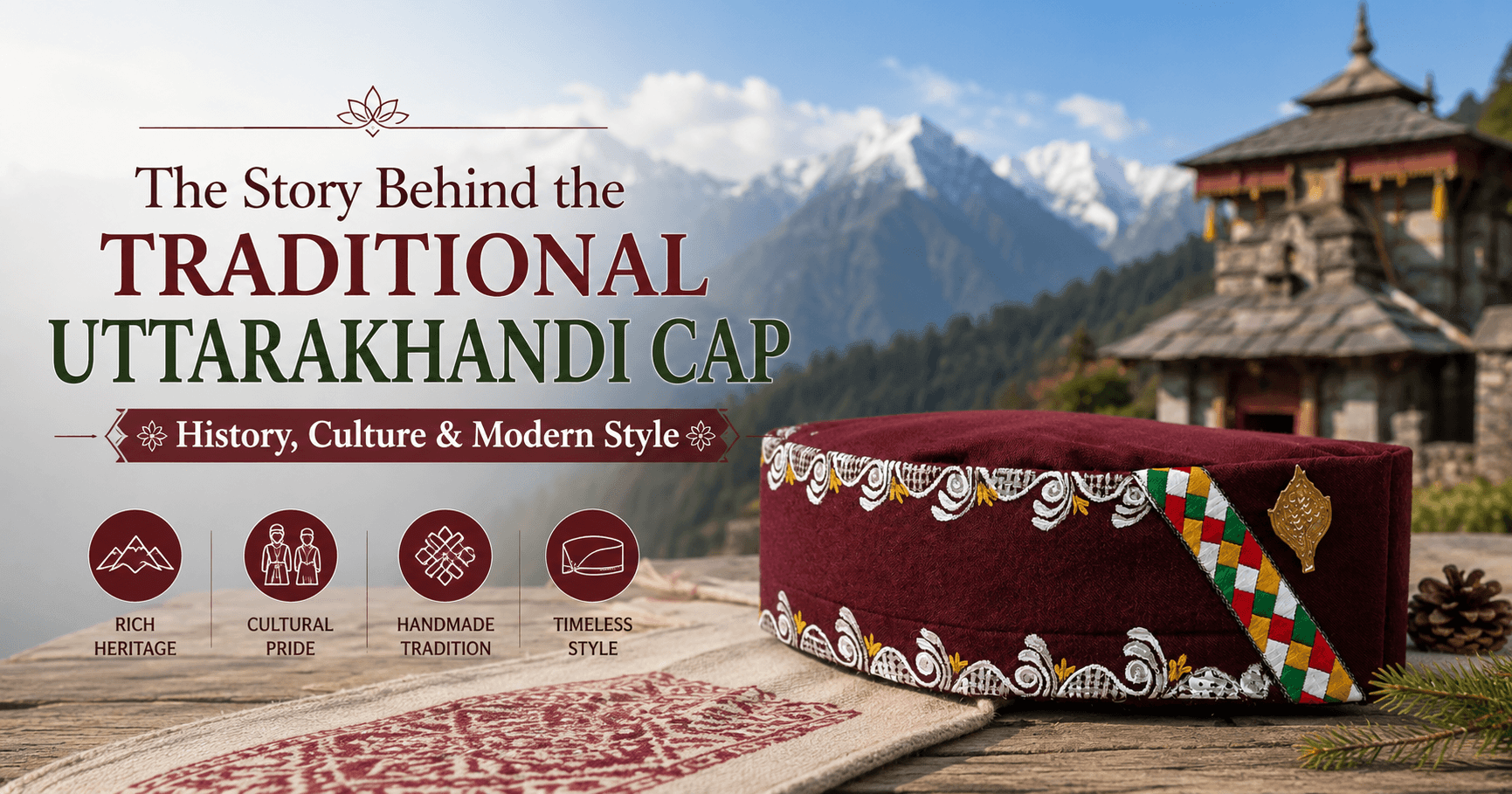
If you have ever traveled through the quiet mountain winding roads of Dehradun, Almora, or Nainital, you must have noticed something uniquely striking about the local men. Worn with quiet pride, a crisp, elegant, dark-colored headgear sits gracefully on their heads.
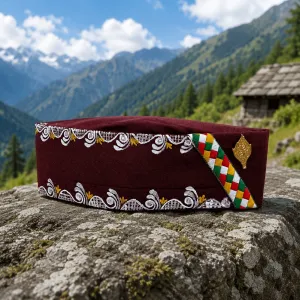
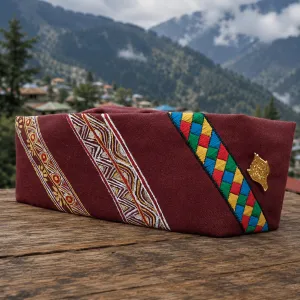
It isn't just an accessory to protect against the chilly mountain breeze. This is the Uttarakhandi Cap—commonly known as the Pahadi Topi.
In a world driven by fast fashion and fleeting trends, the traditional Pahadi cap remains a timeless symbol of mountain dignity, cultural unity, and deep-rooted heritage. Today, it has stepped out of regional village gatherings and reached international platforms, becoming a global fashion statement.
Let's dive into the fascinating history, cultural significance, and modern revival of this iconic Himalayan headwear.
1. The History and Evolution of the Pahadi Topi
To truly appreciate the Uttarakhandi cap history, one must look back at the simple, rugged lifestyle of the Central Himalayas. Historically, the cap was designed for absolute practicality. Made primarily from thick woolen fabric or felt, it kept elders and young men warm during harsh mountain winters.
Unlike elaborate royal turbans found in other parts of India, the design of the traditional Pahadi cap was kept minimal, sleek, and functional. It was boat-shaped, structured, and easy to carry. Over the decades, two distinct cultural variations emerged across the state:
It isn't just an accessory to protect against the chilly mountain breeze. This is the Uttarakhandi Cap—commonly known as the Pahadi Topi.
In a world driven by fast fashion and fleeting trends, the traditional Pahadi cap remains a timeless symbol of mountain dignity, cultural unity, and deep-rooted heritage. Today, it has stepped out of regional village gatherings and reached international platforms, becoming a global fashion statement.
Let's dive into the fascinating history, cultural significance, and modern revival of this iconic Himalayan headwear.
1. The History and Evolution of the Pahadi Topi
To truly appreciate the Uttarakhandi cap history, one must look back at the simple, rugged lifestyle of the Central Himalayas. Historically, the cap was designed for absolute practicality. Made primarily from thick woolen fabric or felt, it kept elders and young men warm during harsh mountain winters.
Unlike elaborate royal turbans found in other parts of India, the design of the traditional Pahadi cap was kept minimal, sleek, and functional. It was boat-shaped, structured, and easy to carry. Over the decades, two distinct cultural variations emerged across the state:
- The Kumaoni Topi: Characterized by its sharp, neatly folded edges and clean structure, often worn in dark grey, black, or deep navy hues.
- The Garhwali Topi: Known for its rounded simplicity, representing the rugged, straightforward spirit of the Garhwal region.
2. Cultural Significance: More Than Just Cloth
In the hills of Devbhoomi Uttarakhand, a man’s cap is directly tied to his honor (Izzat). You will rarely find a cultural event, festival, or wedding in the hills without elders donning their classic caps.
In the hills of Devbhoomi Uttarakhand, a man’s cap is directly tied to his honor (Izzat). You will rarely find a cultural event, festival, or wedding in the hills without elders donning their classic caps.
- A Symbol of Respect: Offering an authentic Uttarakhandi topi to a guest is considered one of the highest marks of respect in Pahadi hospitality.
- The Brahmakamal Connection: Many modern variations of the cap feature a small, beautifully embroidered Brahmakamal (the state flower of Uttarakhand) or a subtle metallic pin. This small detail connects the wearer directly to the sacred flora of the high Himalayas.
- A Identity Marker: Whether a Pahadi is living in Delhi, Mumbai, or abroad, wearing the cap during Kauthig (cultural fairs) or family functions instantly connects them back to their roots.
3. The Modern Style: From Traditional Heritage to Global Fashion
For a long time, the cap was largely associated with village elders. However, a massive cultural shift has occurred over the last few years.
Younger generations have proudly reclaimed the Pahadi topi modern fashion trend. Today, young Pahadi creators, musicians, and entrepreneurs pair the traditional cap not just with classic Kurta-Pyjamas, but with modern denim jackets, tailored suits, and casual streetwear.
When national figures, political leaders, and celebrities proudly wore the Uttarakhandi cap at major national events and international summits, search queries and global interest spiked overnight. It proved that true heritage art never goes out of style—it simply evolves.
4. How to Choose and Style an Authentic Uttarakhandi Cap
If you are looking to add this iconic piece of Himalayan heritage to your personal wardrobe, keep these simple tips in mind:
For a long time, the cap was largely associated with village elders. However, a massive cultural shift has occurred over the last few years.
Younger generations have proudly reclaimed the Pahadi topi modern fashion trend. Today, young Pahadi creators, musicians, and entrepreneurs pair the traditional cap not just with classic Kurta-Pyjamas, but with modern denim jackets, tailored suits, and casual streetwear.
When national figures, political leaders, and celebrities proudly wore the Uttarakhandi cap at major national events and international summits, search queries and global interest spiked overnight. It proved that true heritage art never goes out of style—it simply evolves.
4. How to Choose and Style an Authentic Uttarakhandi Cap
If you are looking to add this iconic piece of Himalayan heritage to your personal wardrobe, keep these simple tips in mind:
- Check the Fabric: An authentic winter cap should be crafted from high-quality wool or dense felt to maintain its structured shape and keep you warm. For summers, lighter cotton-blend options are available.
- Look for Subtle Detailing: A subtle hand-stitched border or a fine Brahmakamal embroidery adds a touch of understated luxury without making the cap look overly flashy.
Styling It Right:
- For Weddings & Festivals: Pair a dark grey or black cap with a cream or white Nehru jacket and Kurta.
- For Casual Outings: Throw it on over a minimalist jacket or sweater to give your outfit an instant, sophisticated cultural edge.
Final Thoughts
The Uttarakhandi cap is not merely a piece of cloth stitched together; it is a living story of mountain resilience, quiet grace, and centuries-old tradition. By wearing one, you aren't just making a fashion statement—you are honoring the soul of the Himalayas.
The Uttarakhandi cap is not merely a piece of cloth stitched together; it is a living story of mountain resilience, quiet grace, and centuries-old tradition. By wearing one, you aren't just making a fashion statement—you are honoring the soul of the Himalayas.