


There's something about a red and white wall painting that catches your eye before you even know what you're looking at. If you've come across Aipan art, you probably know that feeling. It's bold, it's geometric, and it doesn't try too hard to blend in. This article is about that craft, along with Lippan art and a couple of decor pieces that often end up sharing wall space with them in homes that lean into pahadi and folk aesthetics.
What Is Aipan Art and Why Is It Always White on Red
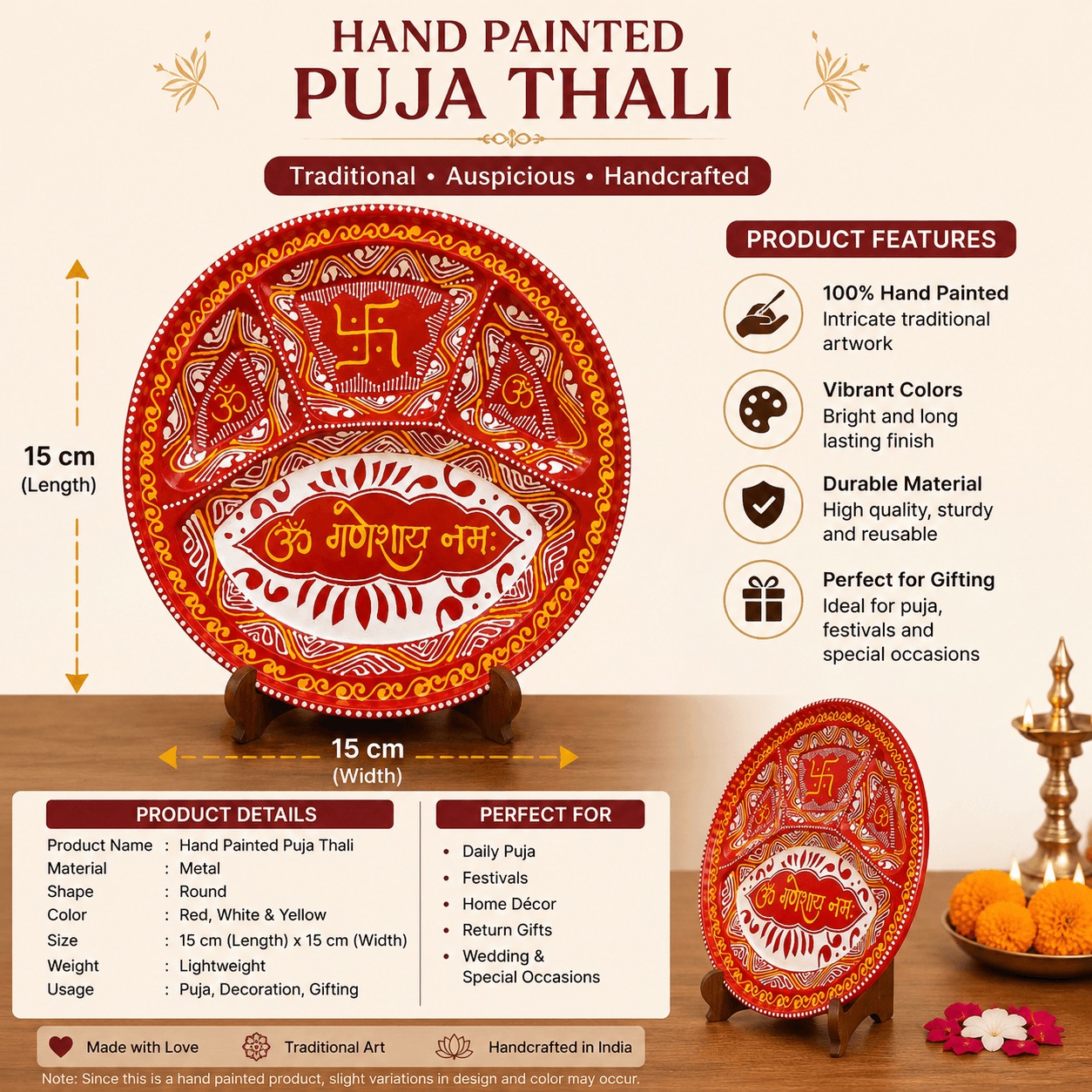
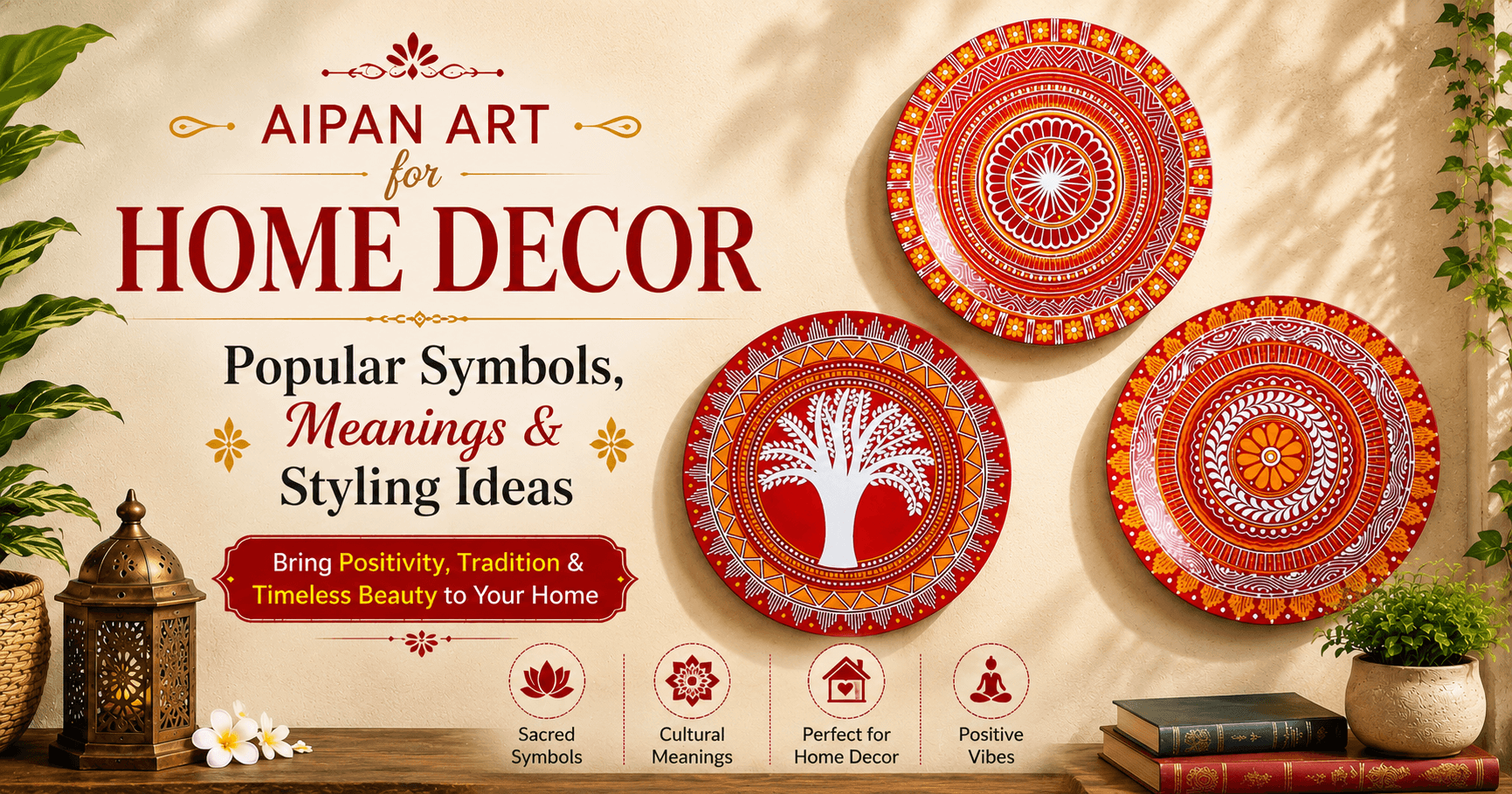
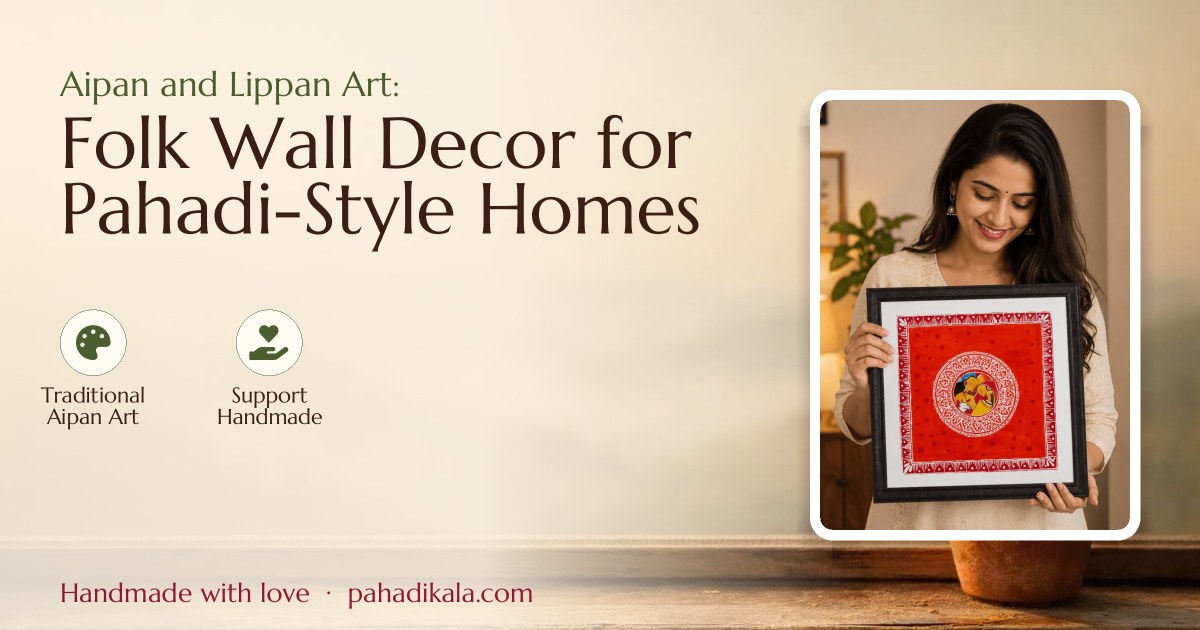
Aipan is a traditional folk art associated with the Kumaon region of Uttarakhand. The signature look is simple to describe but hard to imitate well: intricate white patterns hand-painted on a deep red background. In the framed wall paintings we're talking about here, that same visual language is captured inside a premium synthetic frame measuring 13.5 x 13.5 inches, ready to hang as soon as it arrives. At the center sits a traditional cultural motif, and it's surrounded by detailed hand-painted designs that fill out the square format edge to edge. The color palette stays true to the art form, red, white, and touches of multicolor, nothing washed out or overly modernized.
What makes this different from a printed poster is that the detailing is hand-painted. You can tell by looking closely at the linework, there's a rhythm to it that a machine print doesn't quite replicate. The frame itself is described as premium quality synthetic, there mainly to protect the artwork and give it a clean, finished edge for hanging in a living room or office.
The Golu Devta Motif in Kumaoni Aipan Art
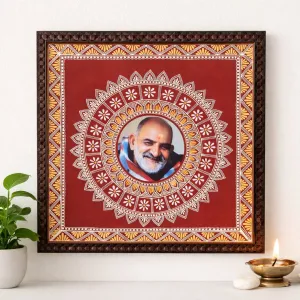
One of the pieces in this style goes a step further and depicts Golu Devta riding a white horse, surrounded by the same traditional Aipan motifs. Golu Devta is worshipped as a folk deity in parts of the Kumaon region, and is commonly associated with justice. I'll be honest, the deeper history and regional variations around this worship are rich enough that they deserve their own dedicated piece of writing rather than a quick summary here. What this particular wall decor offers is a 15 x 15 inch frame, made with red cloth and a wooden frame, in a red, white, gold, and blue color scheme. It's meant for pooja spaces as much as living rooms, and that dual purpose, spiritual and decorative, is part of what makes it a thoughtful gift for festive occasions too.
How Lippan Art Wall Hangings Fit Into a Pahadi-Style Home
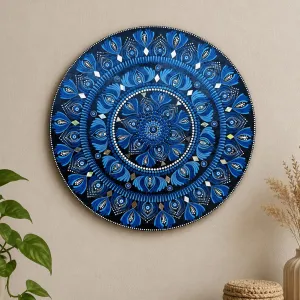
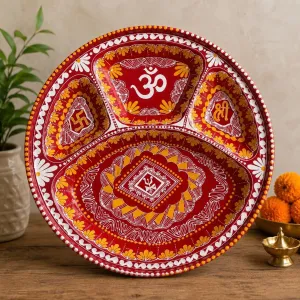
Lippan art isn't something we'd call an indigenous hill craft, and it would be misleading to dress it up as one. It's a mirror and mud work tradition more commonly linked to other parts of India, and this piece doesn't claim otherwise. What it does offer is intricate handcrafted detailing and vibrant colors in a compact 19 x 19 cm format, made with MDF as the base material and finished with handmade Lippan art on top. At 117 grams, it's genuinely lightweight, easy to hang near an entrance, in a hallway, or next to a pooja corner. Brands that focus on pahadi and Himalayan home decor often bring in pieces like this because the color and texture work well alongside Aipan art and other folk pieces, even if the craft itself traveled from a different part of the country. It's a nice reminder that a "pahadi style" home doesn't have to mean every single object on the wall is from the mountains, sometimes it just means the overall look and feel fits the space you're building.
Shop This Look
 Aipan Art Handmade Framed Wall Painting – Traditional Folk Art Décor
₹1,199.00
 Handmade Lippan Art Decorative Wall Hanging – Traditional Home Decor (19 cm)
₹1,299.00
 Pahadi Elegant Red & Gold Premium Wall Clock – 27 cm Stylish Timepiece
₹999.00
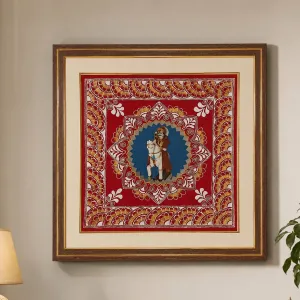 Handcrafted Golu Devta Aipan Art Frame – Traditional Uttarakhand Wall Decor
₹1,499.00
Where a Red and Gold Wall Clock Fits Into the Mix
Not every piece on a decor wall needs a craft story behind it, and the red and gold wall clock here is a good example of that. It's a 27 cm clock with a red dial, a shiny golden frame, and a stylish mandala pattern on the face. At around 1 kg, it has enough heft to feel sturdy once it's up on the wall, and the numbers are clear enough to read from across a room. This isn't presented as a handmade or traditional craft piece, it's a contemporary decor accent, but the red and gold color scheme and the mandala motif make it an easy match for a wall that already has Aipan or Lippan art on it. Think of it less as folk art and more as the piece that ties the whole wall together visually.
Caring for Hand-Painted Folk Art Wall Decor
If you do bring an Aipan art frame into your home, the care instructions are refreshingly simple, clean it with a soft dry cloth. No special cleaning products, no complicated routine. Since these are hand-painted pieces, it's worth keeping them away from direct sunlight for long stretches and handling them gently when dusting, just basic common sense rather than anything the product description specifically calls for beyond the dry cloth instruction.
Bringing It All Together on One Wall
What ties Aipan art, Lippan art, the Golu Devta frame, and even that mandala wall clock together isn't a single shared history, because they don't all share one. It's more that each piece brings its own texture, color, and craft into a space, and together they build a wall that feels layered rather than matched out of a catalog. Whether you're decorating a pooja room, a hallway, or an office reception area, there's something nice about choosing pieces because they genuinely mean something, not just because they fill a blank wall.