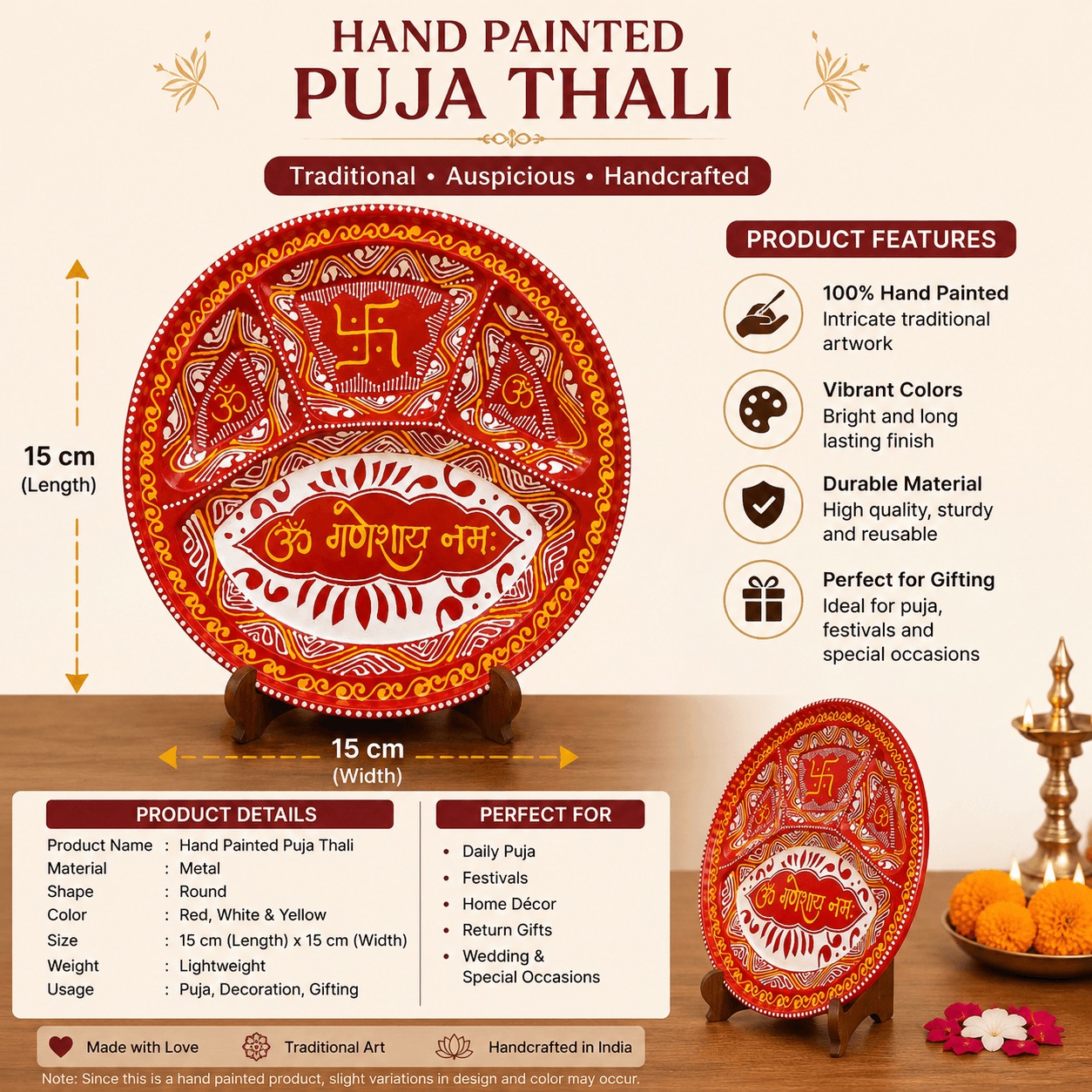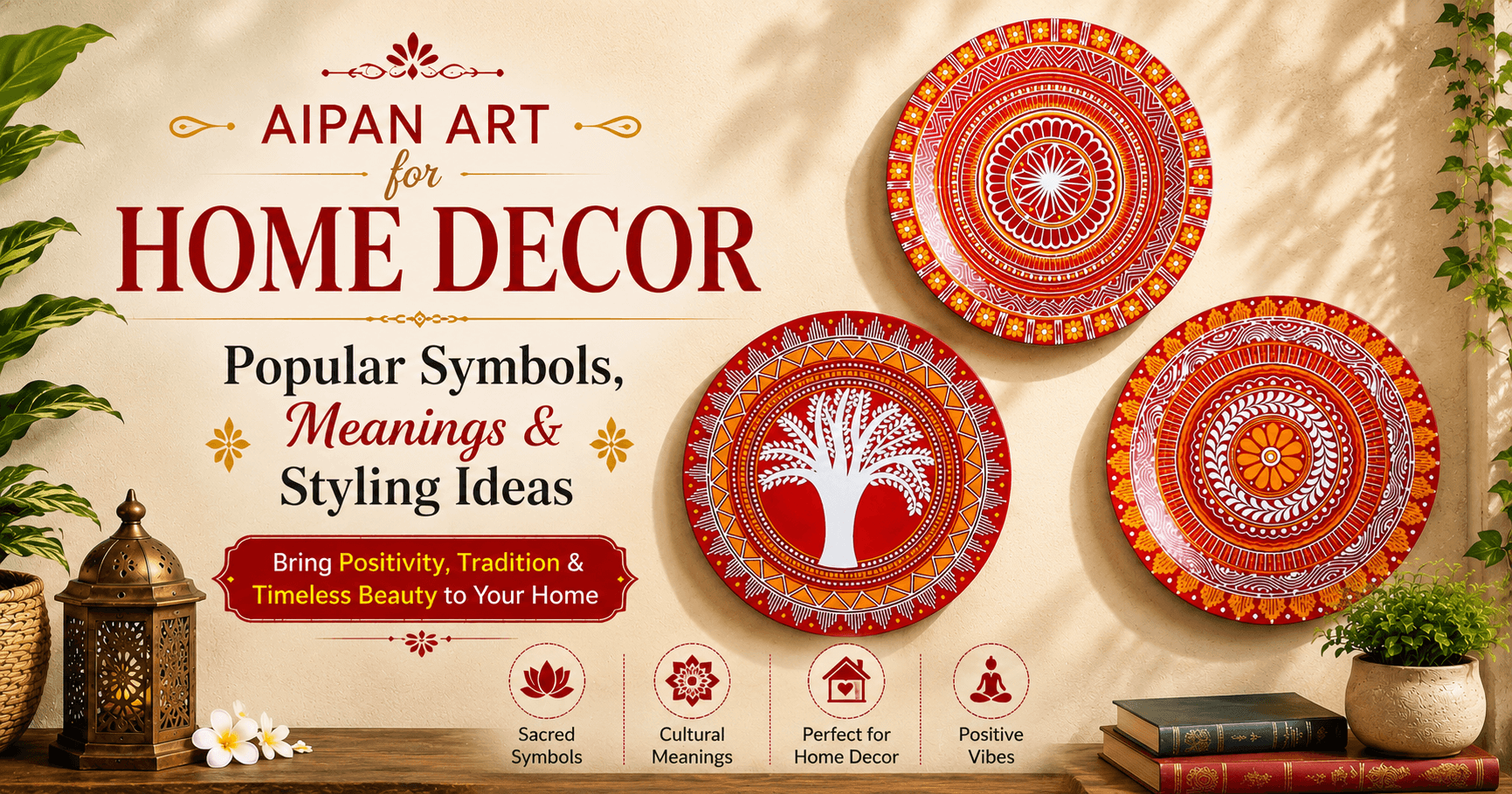

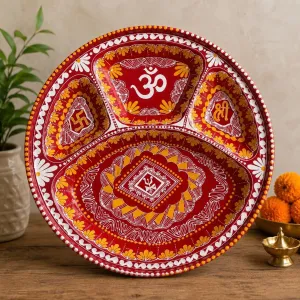


If you've ever seen a red and white geometric pattern painted around a doorway or inside a courtyard in a hill home, there's a good chance you were looking at Aipan. It's a folk art that comes from the Kumaon region of Uttarakhand, traditionally drawn with a paste made from rice flour on a base of red ochre, called geru. Aipan designs are usually seen during festivals, poojas, and other auspicious occasions, painted on floors and walls as a way of marking the space as sacred or welcoming. That's the backdrop against which these handmade jute purses sit, even though what you're holding in your hand is a contemporary accessory, not a ritual wall painting.
What's interesting is how this art form, which started out on floors and walls, has slowly found its way onto everyday objects. Bags, purses, home decor pieces, you name it. It's not that Aipan itself is a "bag making" tradition in any historical sense, it isn't, but the motifs and color palette have been adapted onto accessories as a way of keeping the visual language alive in daily life.
What Makes Aipan Art Recognizable
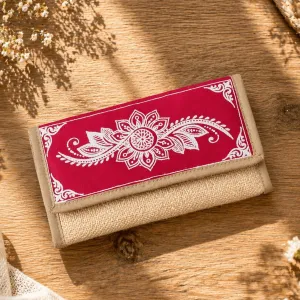
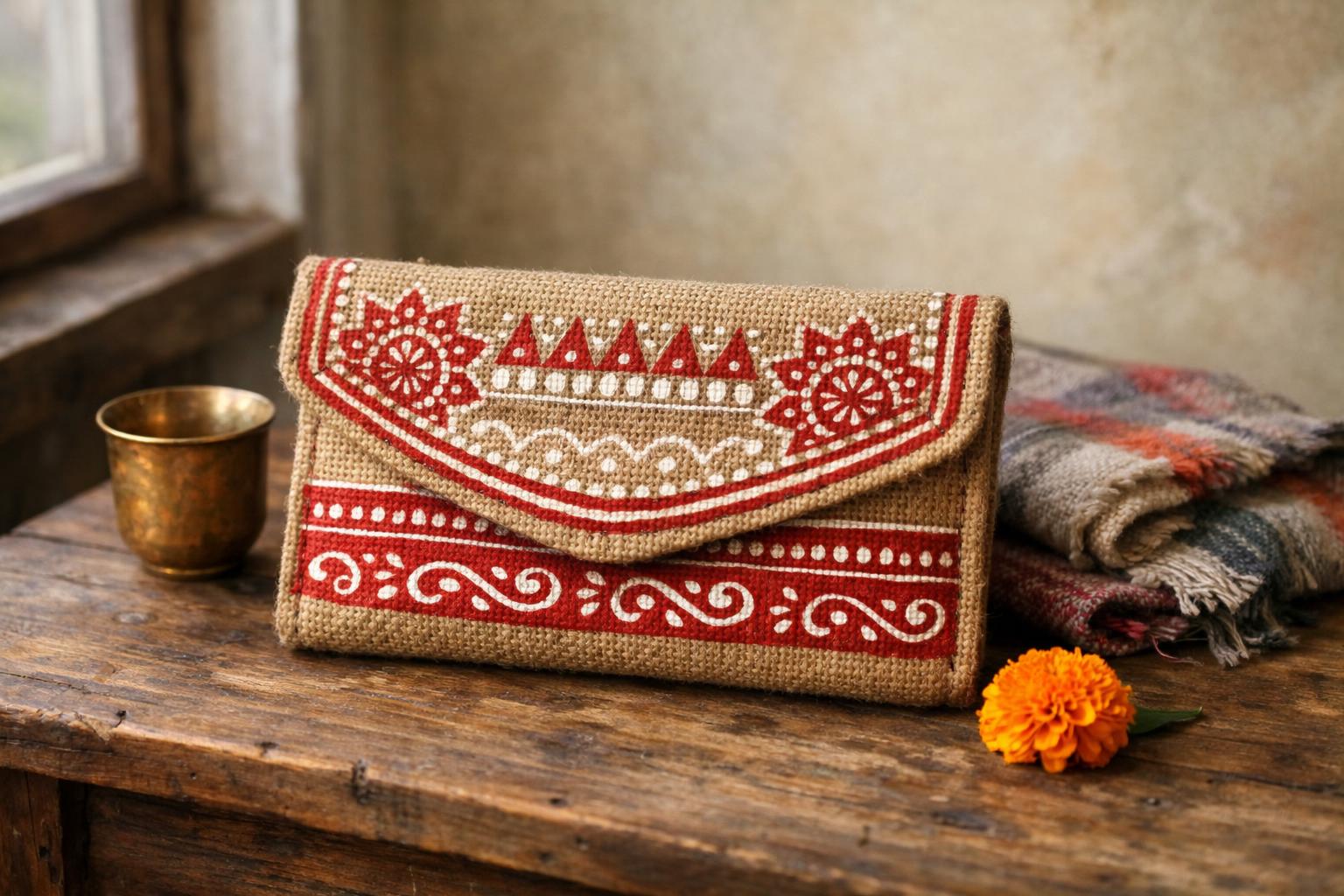
The classic Aipan palette is red and white, and that's exactly what you see on these jute hand purses. One version has a natural jute body with a red Aipan design worked into it, flap-style closure, finished at 9 x 5 inches. The other has a vibrant red flap with intricate white Aipan mandala-style patterns set against a natural jute base, also 9 x 5 inches, and made from a mix of jute and fabric, weighing around 150 grams. Both keep that signature contrast going, red against the earthy, undyed tone of the jute, which is really the whole point of Aipan as a visual style. Simple geometry, done in a color combination that's been used for generations in Kumaoni homes.
Jute itself is worth a mention here too. It's a natural plant fiber, which makes these purses eco-friendly and reasonably durable for daily handling. You're not dealing with synthetic material, you're dealing with something that has a bit of texture and grain to it, which honestly suits a hand-painted design better than a smooth plastic surface would.
Everyday Use for a Traditional Design
Both purses are compact, 9 x 5 inches, and built with a flap closure that's easy to carry. They're meant to hold the basics, cash, a phone, a couple of cards, small essentials you'd normally throw into a sling bag. That makes them practical for daily use, but the Aipan artwork also makes them a natural fit for festive occasions and weddings, where you want something that looks a little more ethnic than your regular handbag. A few people also pick these up specifically as gifts, since the combination of handmade craft and cultural motif tends to feel more thoughtful than a standard store-bought accessory.
Shop This Look
 Handmade Jute Hand Purse with Traditional Aipan Art | Ladies Clutch | Size 9x5 Inch
₹329.00
 Handmade Aipan Art Jute Hand Purse (9 x 5 Inch)
₹280.00
 Handcrafted Jagannath Print Cotton Tote Bag – Eco-Friendly Stylish Carry Bag | 18*14cm
₹130.00
 Handmade Om Design Keychain Set of 2 | Traditional Hand-Painted Spiritual Key Ring Set
₹180.00
Other Handmade Pahadi Accessories Worth Knowing About
Aipan purses aren't the only handmade accessories carrying a cultural motif into daily life. There's also a cotton tote bag featuring a Jagannath print, made from high-quality cotton fabric and sized at 18 x 14 cm. It's lightweight, has sturdy stitched handles, and is roomy enough for books, a wallet, or whatever small items you're carrying around for the day. It works well for college, office errands, or quick shopping trips, basically anywhere a plastic bag would otherwise do the job, except this one you can reuse and it has a bit of visual character to it.
On the smaller end, there's a handmade Om design keychain set of two, hand-painted in red and white. The Om symbol is widely associated with positivity, peace, and good fortune, which is why these tend to get picked up as gifts, or for return gifts at events, as much as for personal use. They're lightweight, easy to carry on a keyring or bag, and since they're sold as a set of two, there's an easy option to keep one and gift the other.
Why These Small Handmade Details Matter
None of these are grand heritage pieces with centuries of documented history behind them specifically as products. What they are is a way of keeping certain motifs and techniques, Aipan art especially, visible and usable outside the specific ritual context they originally belonged to. A purse you carry to a wedding, a tote you take to college, a keychain you hand to a friend as a small gift, these are ordinary, everyday moments. But they're also small opportunities to carry a bit of pahadi visual tradition along with you, even if you're nowhere near the hills.
If you're drawn to handmade accessories that have a story behind their design, even a simple one, pieces like these jute purses, the cotton tote, and the Om keychains give you something with a bit more meaning than a mass-produced equivalent. Not because they claim to be centuries old, but because they're made by hand, using motifs that have genuinely been part of hill life for a long time, just not necessarily in the form of a handbag.