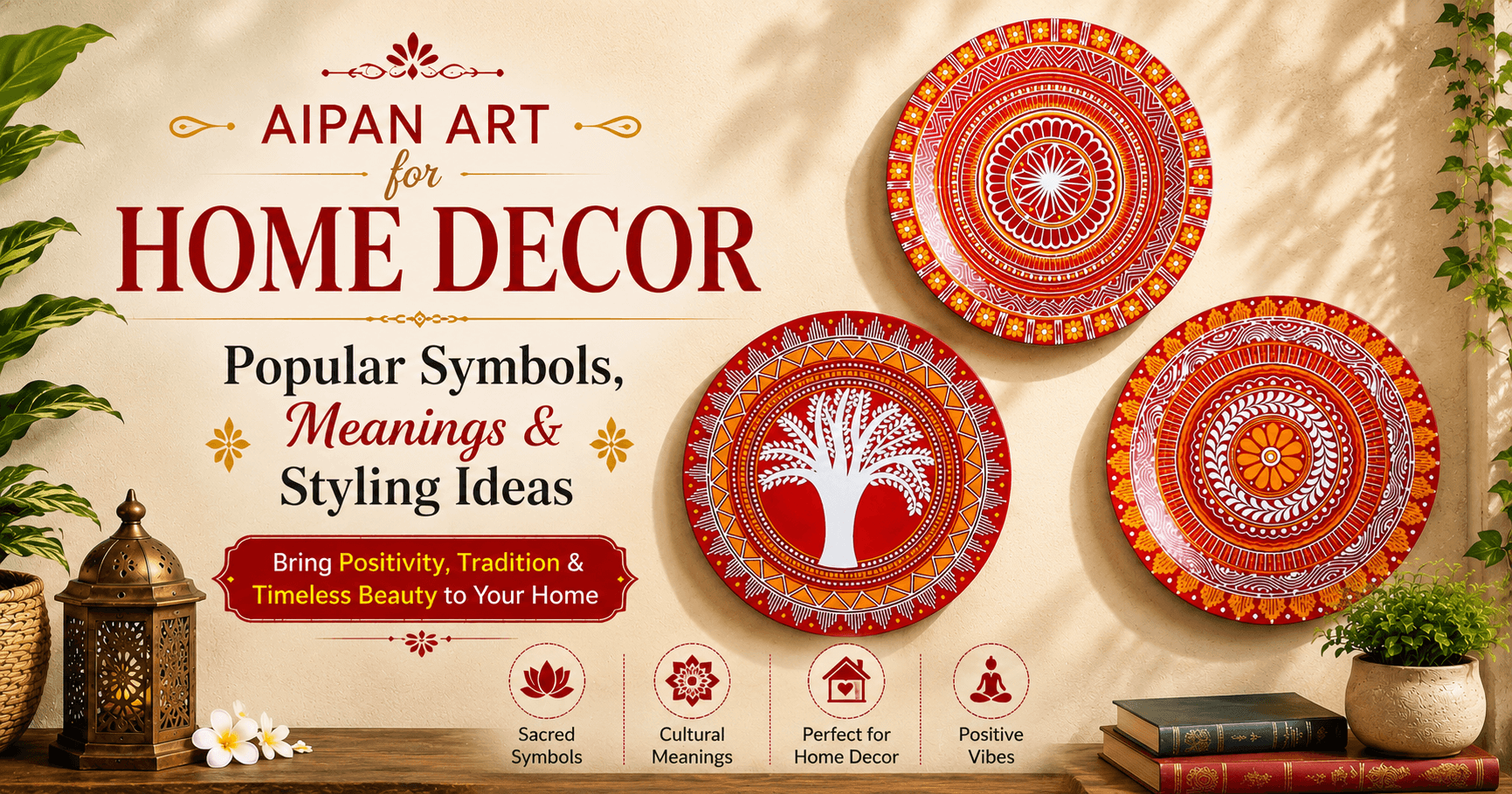

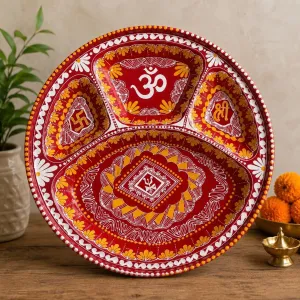



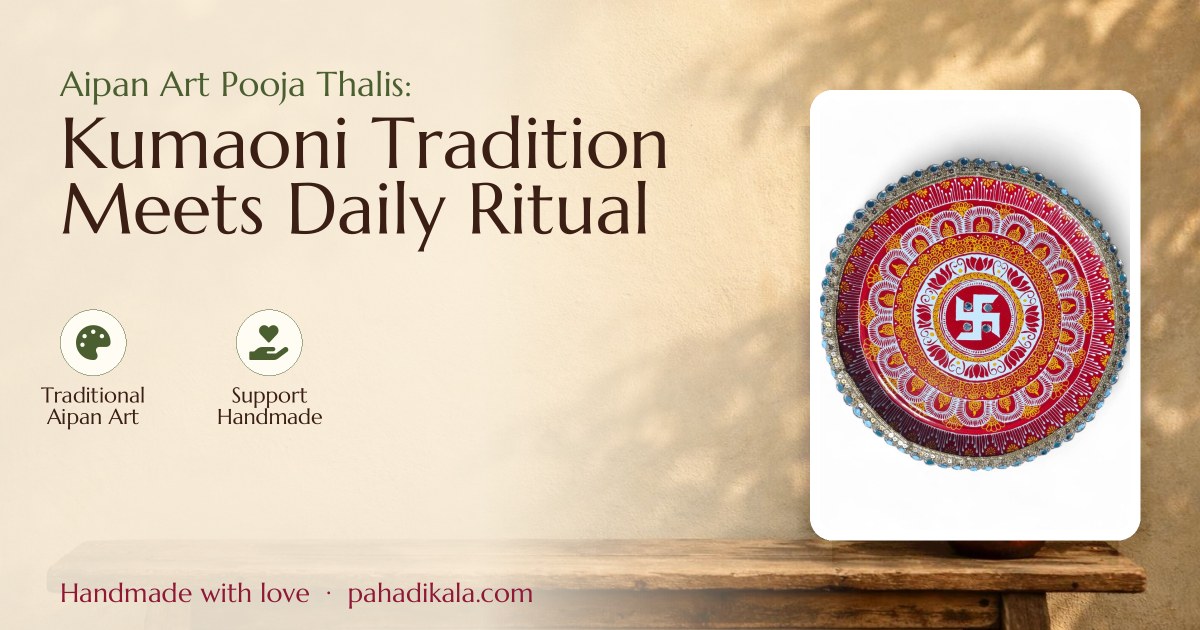
If you've ever seen a pooja thali with red and white geometric patterns painted around the rim, chances are you were looking at Aipan art. It's a folk art style from Uttarakhand, and it shows up on everything from thalis to wall plates to the little lota and glass that sit beside them during a ritual. The patterns aren't random. They're meant to mark a space or an object as auspicious, something fit for prayer, for a wedding, for a new home.
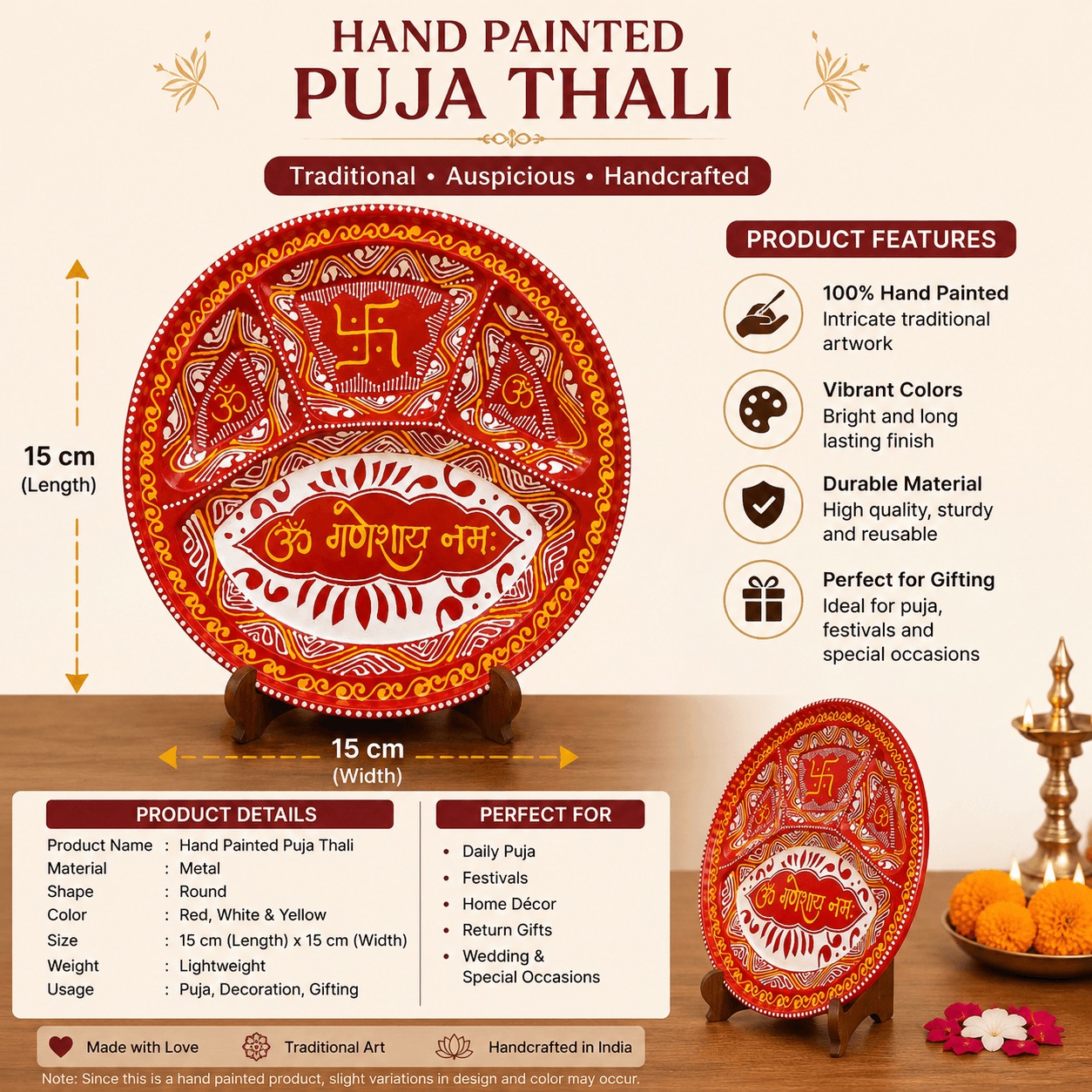
What strikes you first is the color combination. Most Aipan work uses a deep red or maroon background with white line work on top, and once you've seen a few pieces you start recognizing the style instantly even on products that aren't labeled as Aipan. The Swastik thali, the Durga wall plate, and the Kumaoni Aipan pooja sets we're talking about here all share that visual language, even though each one is a slightly different product with its own use.
What Is Aipan Art and Where Does It Come From
Aipan is described as a traditional Kumaoni art form, Kumaon being a region within Uttarakhand. The motifs center on symbols that carry meaning in Hindu ritual life, things like the Swastik and Om, geometric borders, and floral or dot patterns that frame the main design. On a pooja thali, this isn't just decoration for the sake of looking nice. The symbols themselves are tied to ideas of prosperity, positivity, and auspicious beginnings, which is exactly why you'll find Aipan-style thalis brought out during weddings, housewarming ceremonies, and major festivals.
It's worth being honest here that Aipan as an art form has its own long history in the hills, one that goes well beyond what any single product description can capture. What we can say with confidence is that it remains part of everyday Kumaoni life, hand-painted onto ritual items that people actually use, not just items that sit behind glass.
The Swastik and Om Motifs and Why They Matter in a Pooja Thali
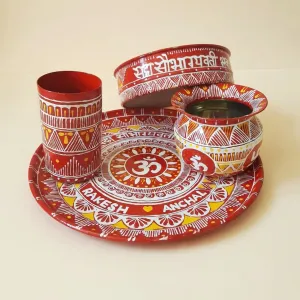
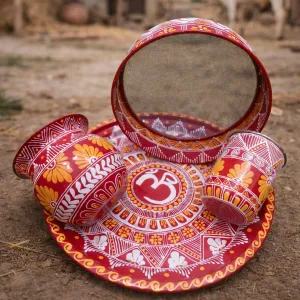
The Swastik motif on a pooja thali isn't there by accident. It's one of the most recognized symbols of auspiciousness in Hindu tradition, and placing it at the center of a thali used for daily or festive worship reinforces the purpose of the object itself. Similarly, the "Om" design found on the Aipan Pooja Thali Combo Set gives the set a spiritual anchor, something that makes sense whether it's being used for a quiet morning pooja or laid out for a wedding ritual like haldi or mehendi.
The Maa Durga wall plate takes a slightly different approach. Instead of a geometric or symbolic motif, it's a full hand-painted depiction of Maa Durga in red and white, done in a folk art style. It's meant more for display, whether that's a wall near your pooja space or a shelf where you want something with spiritual character. Each one is hand-painted, so no two pieces turn out exactly alike, which is part of what gives handmade work like this its character.
Shop This Look


Materials and What Makes These Thali Sets Practical
Beyond the artwork, these pieces are meant to actually be used, not just admired. The Swastik Aipan thali is built from a durable, lightweight material, sized at 30x30 cm, and described as easy to clean and maintain, which matters if you're planning to use it regularly rather than once a year. The Aipan Pooja Thali Combo Set goes further, pairing a 30 cm hand-painted thali with a glass, lota, and chhanni, all made from durable metal with a painted finish, so you get a full ritual set rather than a single plate.
The Kumaoni Aipan Karwa Chauth set is built on stainless steel, which is a practical choice for something that gets handled during rituals like Karva Chauth, Diwali, or Navratri. It includes a thali measuring about 11 inches across, a lota around 4 inches tall, a channi roughly 7.5 inches in diameter, and a small glass, with the whole set weighing in at approximately 500 grams. Stainless steel also means it's lightweight for its size and holds up to repeated cleaning, which is a fair concern for anything that's going to see use every week instead of sitting in a cupboard.
Choosing an Aipan Pooja Thali for Your Home
If you're deciding between these pieces, it helps to think about how you'll actually use them. The Swastik thali at 30x30 cm works well as a standalone piece for everyday pooja or festive serving, and it doubles as decor when it's not in active use. The combo set makes more sense if you want a complete ritual setup in one go, especially for something like a wedding, a haldi ceremony, or a housewarming where you need a thali, lota, and glass together rather than piecing them from different places.
The Karwa Chauth set leans practical with its stainless steel build, which suits households that want something sturdy for repeated festival use across the year, from Karva Chauth to Diwali to Navratri. And if you're looking for something purely for display, the Maa Durga wall plate at 12 cm is small enough to fit near a pooja corner or on a wall without taking over the space, while still carrying that same red and white Aipan-inspired character.
None of these pieces need a big occasion to earn a place in your home. A pooja thali gets used far more often than people expect, quiet mornings, small rituals, a guest dropping by during a festival week. Having something hand-painted and made with intention, even in a small way, tends to make those ordinary moments feel a little more grounded.