


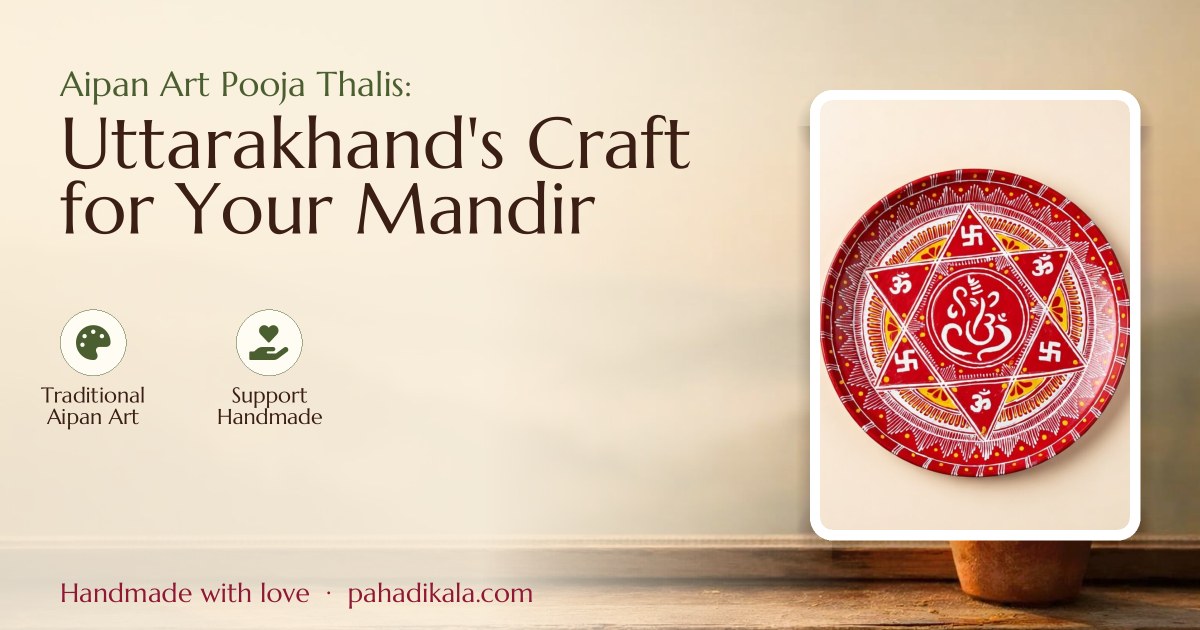
If you've ever seen a pooja thali with deep red background and intricate white line work, chances are you were looking at Aipan art. It's one of those crafts that quietly shows up in homes across the hills and, increasingly, in homes far from them too. There's something about the geometric patterns and the Ganesh motifs that just feels right for a pooja corner, festive table, or a gift you want to mean something.
This piece is about that craft, the materials that go into these hand-painted thalis, and why they've found a steady place in rituals from daily pooja to Diwali and Karwa Chauth.
What Aipan Art Is and Why the Red and White Palette Matters
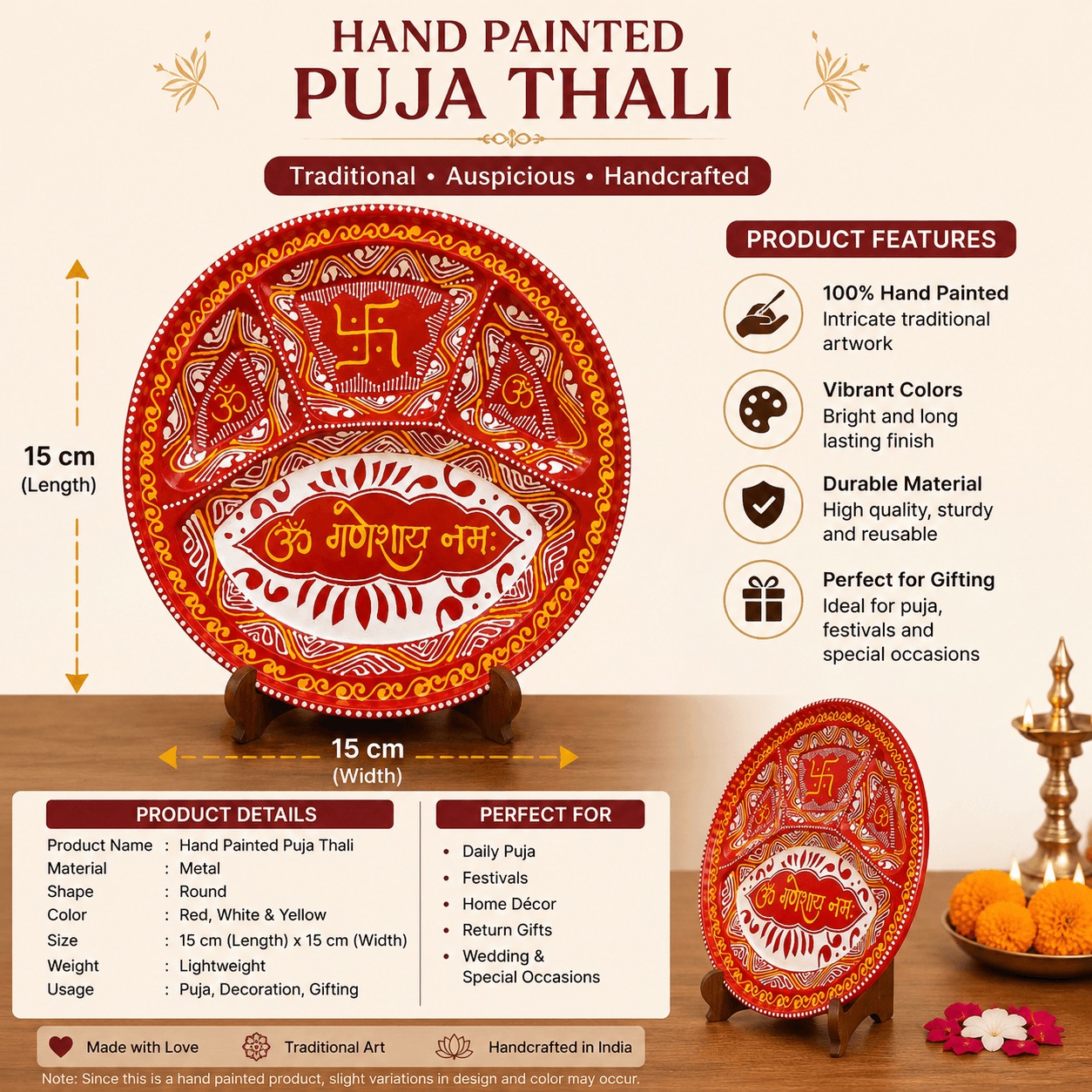
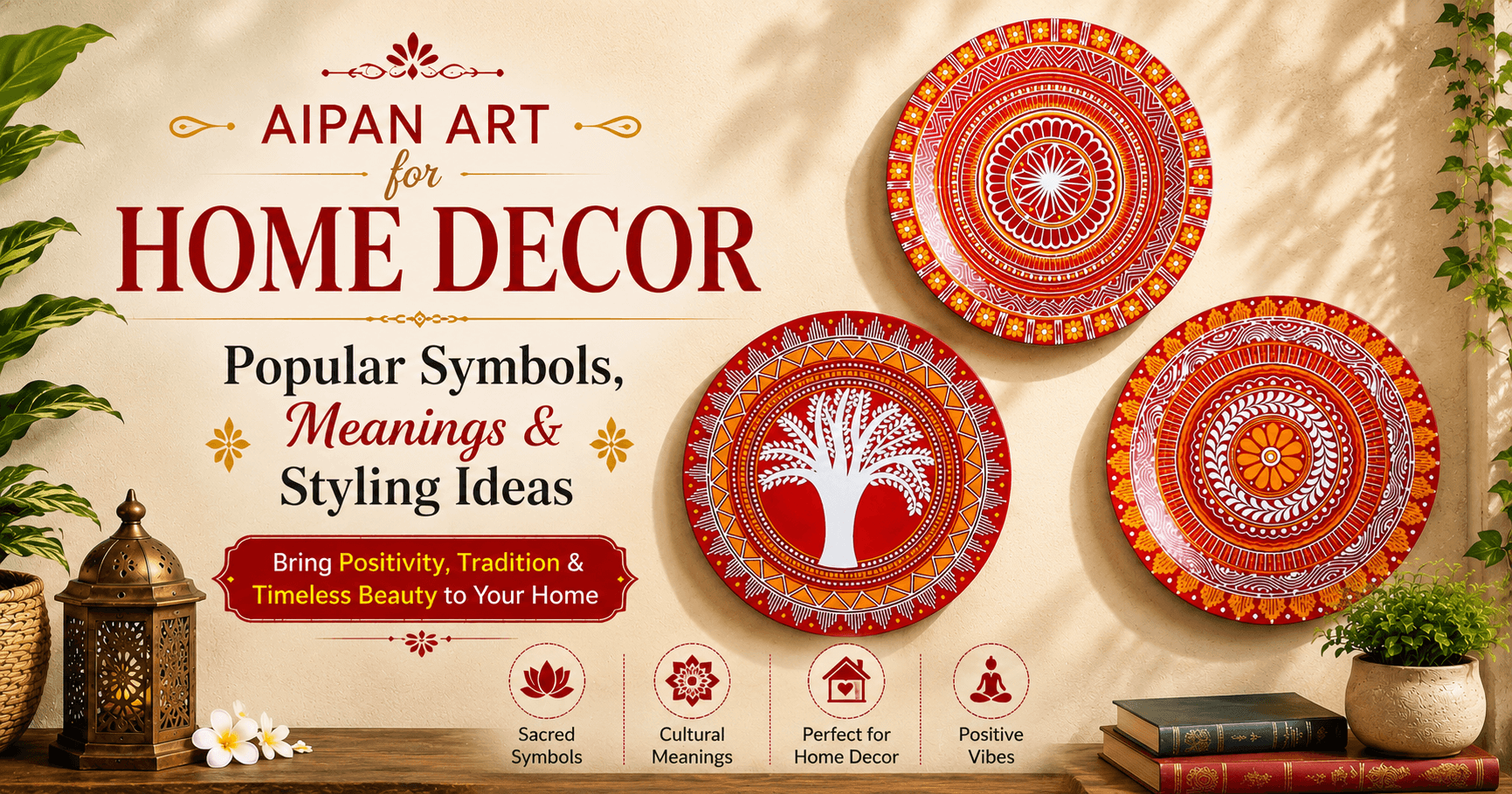
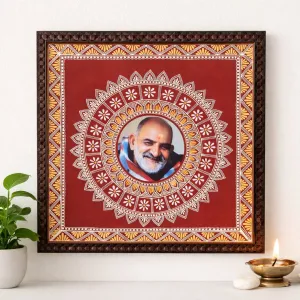
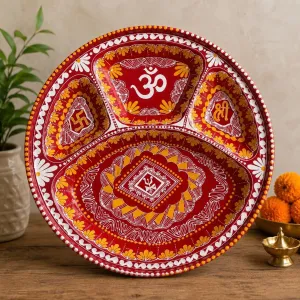
Aipan is traditionally associated with the Kumaon region of Uttarakhand, and it's generally recognised as part of the ritual art practiced in homes there during poojas and auspicious occasions. The signature look is a deep red or maroon base with white motifs painted over it, usually built from geometric shapes, dots, lines, and sacred symbols. You'll often see Om, swastik, and Ganesh motifs worked into the design, which is exactly why this art style translates so naturally onto a pooja thali.
What's nice about this particular craft is that it isn't trying to be decorative for decoration's sake. Every symbol has a place in ritual life. The red and white isn't random either, it's the combination most people recognise instantly as Aipan the moment they see it, whether on a wall, a floor design, or here, on a thali.
The Materials and Craftsmanship Behind These Pooja Thalis
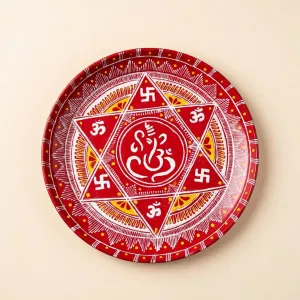
These thalis are made of durable metal with a painted finish, and the artwork is hand-painted rather than printed, which is part of why no two pieces look machine-perfect. The designs are done in rich red, white, and yellow tones, with intricate motifs covering the surface in fine detailing. At 30 cm, there's enough room on the plate to actually use it for its purpose, not just admire it. You can comfortably fit a diya, roli-chawal, flowers, and other pooja essentials without things sliding off the edges, which matters more than people expect when you're in the middle of an aarti.
Some of these thalis feature a Ganesh motif specifically, which fits well for pooja, weddings, haldi, and mehendi ceremonies where an auspicious start matters. Others lean into the broader traditional pattern work without a specific deity motif, which makes them a bit more flexible for everyday use at the mandir.
Shop This Look


Using Aipan Thalis for Diwali, Karwa Chauth, and Daily Pooja
Diwali and Karwa Chauth are both coming up in the next couple of months, and this is exactly the kind of season where a thali like this earns its keep. For Karwa Chauth specifically, there's a combo set worth knowing about: it includes 2 large 30 cm plates, one 8 cm bowl, one 8 cm glass, one 10 cm lota, and one 12 cm spoon, all with a traditional design and premium finish. Instead of hunting down matching pooja items separately, you get the whole set together, which is genuinely useful on a day packed with rituals.
Beyond the big festivals, these thalis are built for regular use too. Daily pooja, housewarming ceremonies, Navratri, or just keeping something beautiful on your mandir shelf year round, the hand-painted artwork holds its own whether it's a quiet Tuesday evening aarti or a house full of guests for Diwali.
Choosing the Right Aipan Thali for Your Home or as a Gift
If you're picking one for your own home, think about what you'll actually use it for most. A thali with the Ganesh motif works beautifully for weddings, haldi, and mehendi functions where that specific symbolism matters. A thali with the broader traditional pattern work is a solid everyday choice for your mandir setup. And if you're prepping for Karwa Chauth or want a complete ritual set rather than a single plate, the combo set covers the plates, bowl, glass, lota, and spoon in one go.
These also make for a thoughtful gift. A hand-painted thali says more than something mass produced ever could, especially for occasions like a wedding, a housewarming, or even just visiting someone's home during the festive season. It's practical, it's got real craftsmanship behind the painted finish, and it carries a bit of Uttarakhand's art tradition with it wherever it ends up.
At the end of the day, a pooja thali is something you touch and use often, not something that just sits on a shelf. Having one with this kind of detailing on it, in colours that have meant something in ritual settings for a long time, adds a little weight to ordinary moments and a lot more to the big ones.