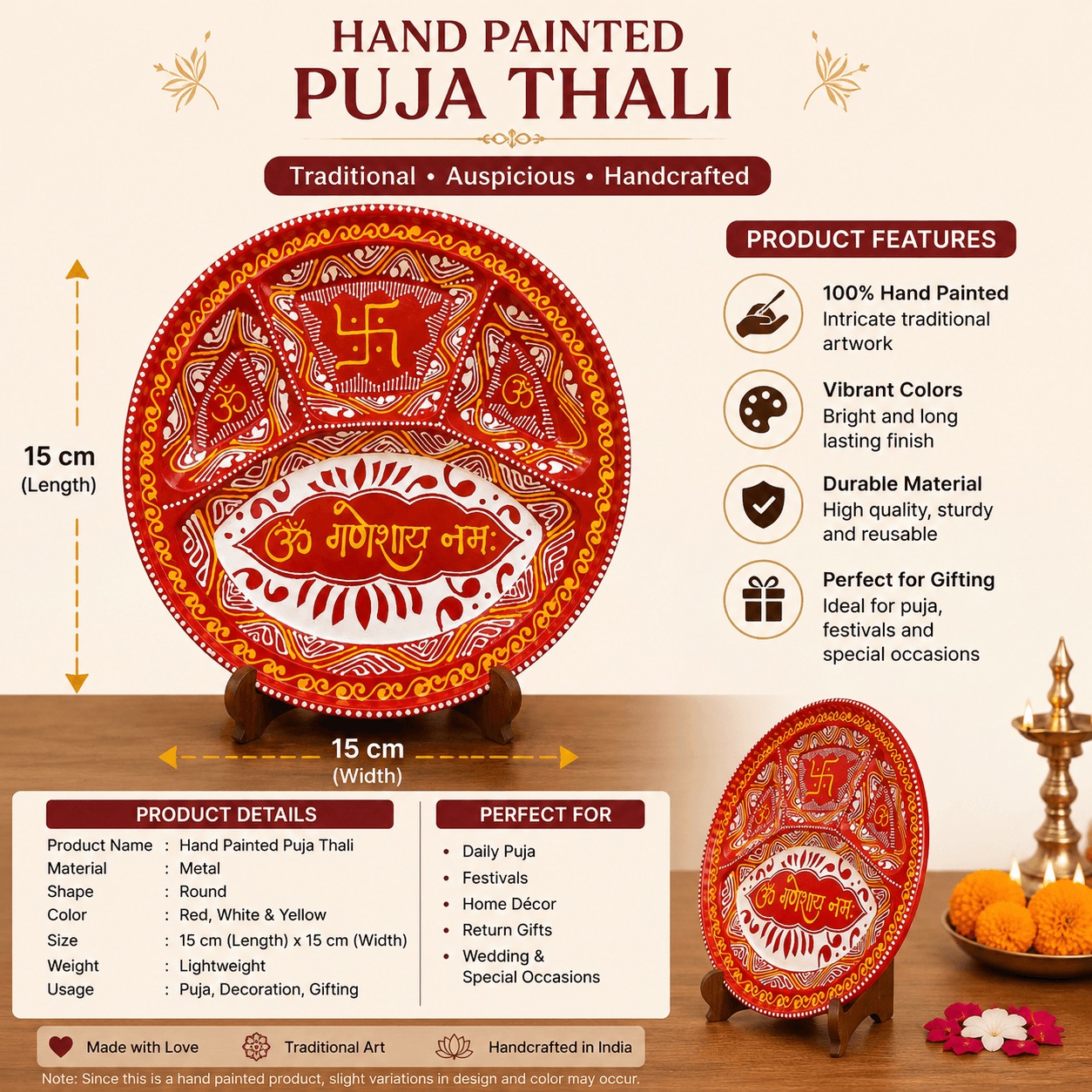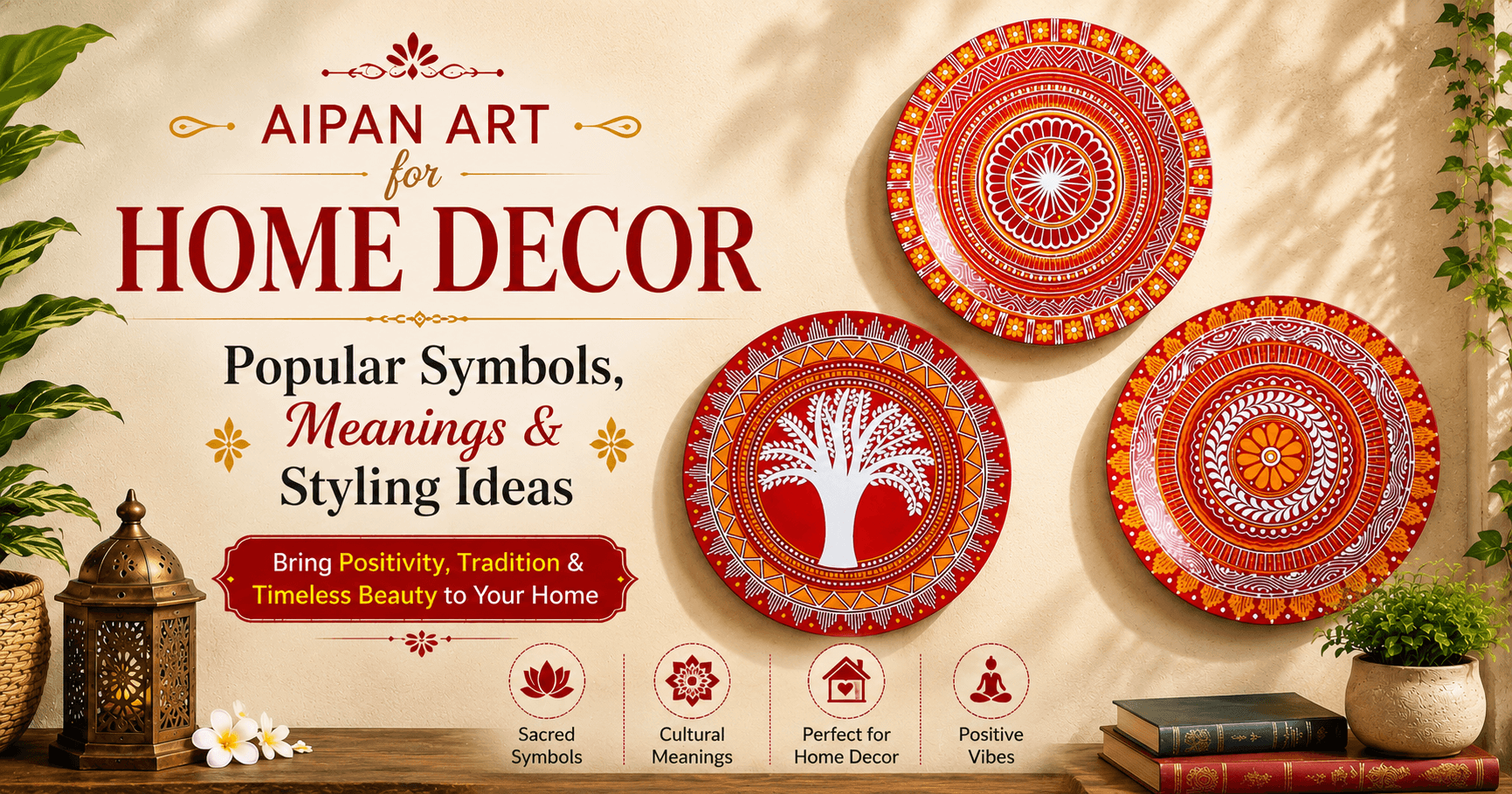

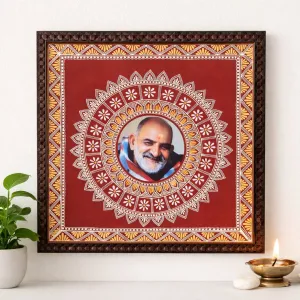
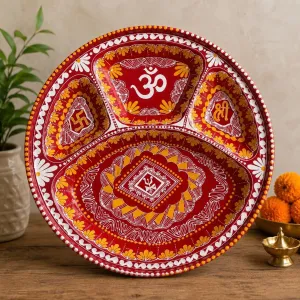
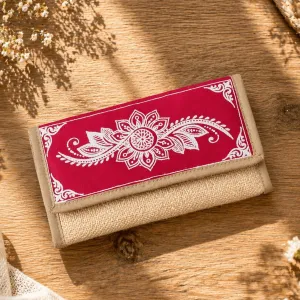


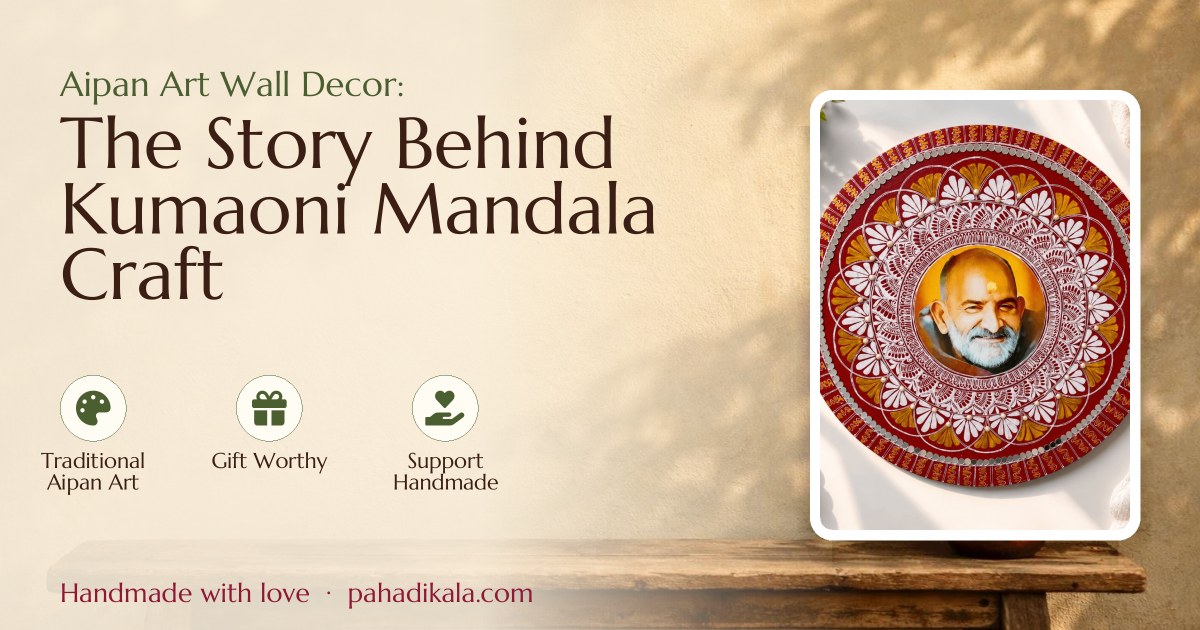
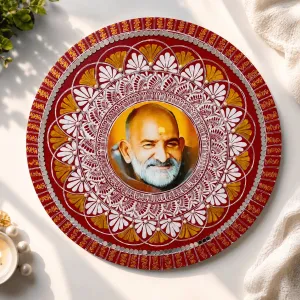
If you've ever walked through a home in the hills of Uttarakhand during a festival, you may have noticed red and white patterns drawn near doorways, on verandah floors, or around the pooja space. That's Aipan, a traditional folk art from the Kumaon region, and it's the foundation of several wall decor pieces we're talking about today, including a Neem Karoli Baba mandala, an Om mandala fiber frame, and a classic footprint wall frame.
Aipan is traditionally drawn with fingers using a rice paste called bisvar on a base of red ochre, known locally as geru or geol mitti. The red background and white geometric lines aren't just decorative choices, they carry ritual meaning in Kumaoni households, often made during festivals, weddings, and other auspicious occasions. Over time, this floor and wall art tradition has also found its way into framed, ready-to-hang decor pieces for people who want that same visual language in their homes without redoing it by hand every season.
What Is Aipan Art and Where Does It Come From
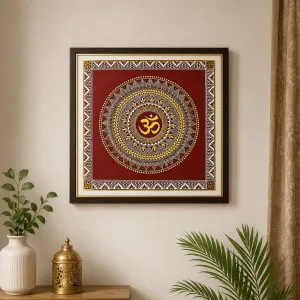
Aipan belongs to the Kumaoni cultural tradition of Uttarakhand, and it's one of the more recognizable folk art styles from the Himalayan region. The patterns are usually geometric, built from dots, lines, and symmetrical shapes, sometimes combined with figures or symbols tied to specific deities or occasions. The Neem Karoli Baba Mandala Wall Decor and the Om Mandala Art Frame both take this visual approach, a circular mandala structure in red, white, and golden tones, with a central image or symbol that gives the piece its spiritual focus.
The footprint wall frame leans closer to the classic form of Aipan, with white patterns set against a vibrant red base, which is really the color pairing most people associate with this craft in the first place. It's a simpler, more traditional expression compared to the mandala pieces, and that contrast is part of what makes Aipan interesting. The same base technique can show up as a minimal geometric pattern or as a detailed mandala with a portrait at its center.
Why Red, White, and Gold Dominate These Designs
There's a reason these four products all share a similar color story. Red and white are the signature combination in traditional Aipan work, and the golden detailing you'll see in the mandala and Om frame pieces adds a layer of richness that fits well in festive or spiritual settings. None of this is random pattern-making, it echoes a visual tradition that has been part of Kumaoni homes for generations, even as the format has moved from hand-drawn floor art to framed wall pieces you can buy and hang.
It's worth separating the Aipan-based pieces from the Classic Red Decorative Wall Clock, though. The clock isn't an Aipan piece, it's a contemporary round wall clock with bold white and yellow numerals, a decorative center pattern, and what the product describes as an elegant traditional Indian design. It shares the red color palette and a sense of traditional styling, which is why it pairs naturally with the other three pieces on a wall, but it's a modern functional object rather than a folk art form with its own documented history.
Shop This Look


Where These Pieces Fit in a Pahadi-Inspired Home
The Neem Karoli Baba Mandala, at a compact 13 x 13 cm, is sized for smaller wall spaces, shelves, and corners, which makes it easy to place near a pooja altar or in a quiet reading nook without overwhelming the space. The Om Mandala Art Frame is a bigger statement piece at 20 x 20 inches, framed in fiber with a premium finished look, and it's suited to larger walls in a living room, bedroom, or a dedicated meditation space. The footprint wall frame sits in between at 8.8 x 8 inches, light enough and described as durable, ready to hang in a hallway or pooja room.
If you're setting up a small meditation corner or a pooja space at home, these pieces can work together rather than competing. A larger Om mandala as the central visual, a smaller Aipan footprint frame nearby, and the compact Neem Karoli Baba mandala tucked into a shelf or side wall all keep the red, white, and gold theme consistent without needing everything to be the same size or shape.
A Thoughtful Gift for Festive Occasions
With Diwali season approaching, home decor and gifting naturally come up more often, and pieces rooted in Indian traditional art tend to hold up well as gifts because they carry meaning beyond just looking nice on a wall. Each of these pieces is described as suitable for gifting, whether it's for someone setting up a new pooja corner, a person who appreciates Indian handicrafts, or a family member who'd like a small spiritual touch added to their living space.
None of these products claim to be centuries-old relics, and they don't need to be. What they do offer is a connection to a recognizable Himalayan craft tradition, Aipan art from Kumaon, presented in a format that fits easily into contemporary homes. Whether it's the detailed mandala with Neem Karoli Baba at its center, the Om symbol framed for a meditation space, the classic red and white footprint design, or a red wall clock that rounds out the color scheme, these are pieces that bring a bit of pahadi artistic character into everyday spaces, pooja room, living room, or bedroom alike.