


Walk into most Indian homes and you'll spot some version of folk art on a wall, a shelf, or tucked into a corner near the pooja space. Most people walk past it without a second thought. But if you stop and actually look, there's usually a story baked into the patterns, the colors, even the placement. That's really what we mean when we talk about beyond decoration: the cultural stories hidden in traditional Indian folk art are often sitting right there in plain sight, in things like a jute tote bag or a wall frame, waiting for someone to notice them.
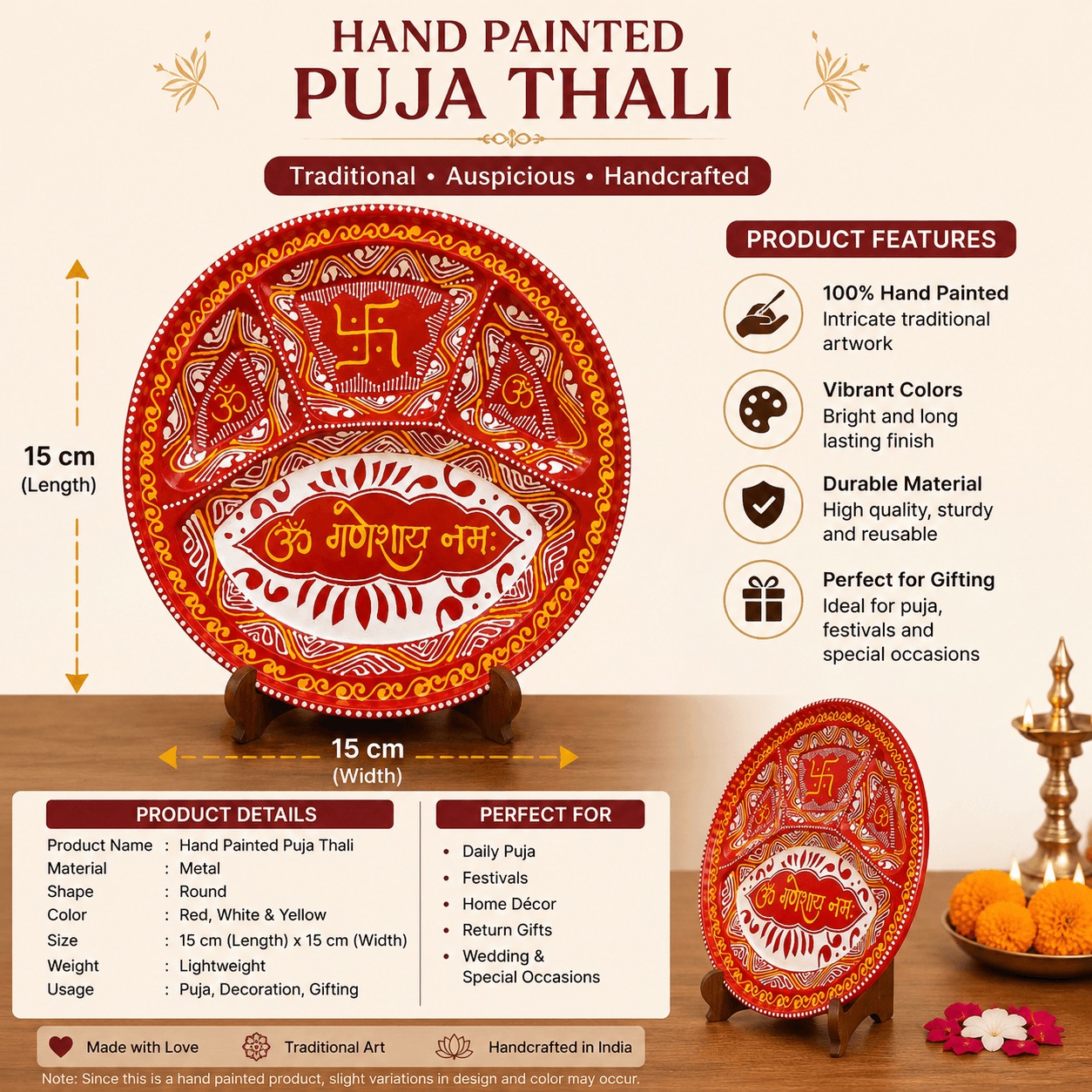
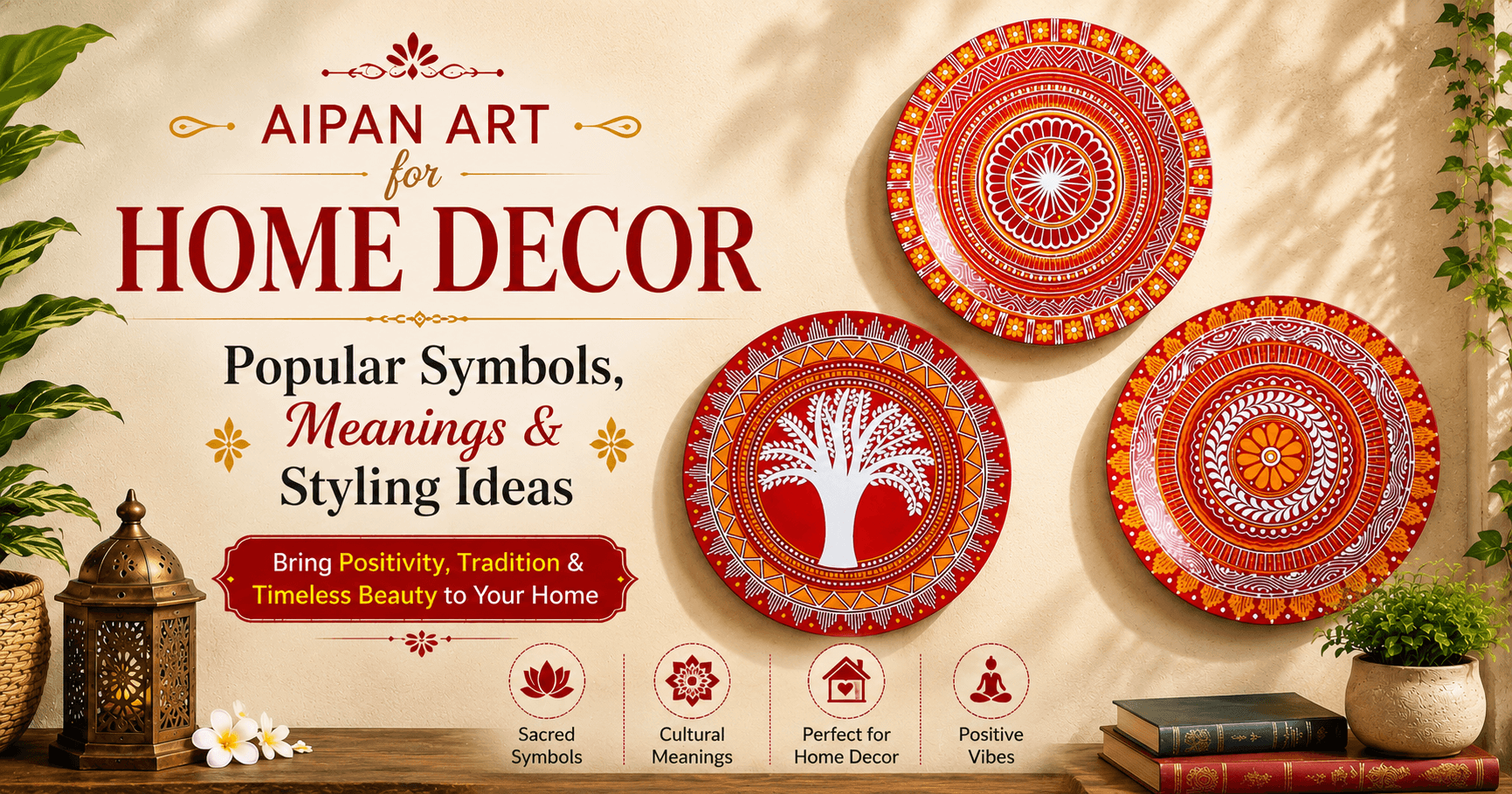
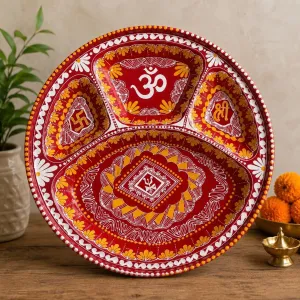
Aipan art is one of those styles that rewards a closer look. It comes from the Kumaon region and is traditionally done in white rice paste on a red or maroon base, a combination you'll see repeated across the pieces here, from the Shri Radha wall frame to the mandala decor with its footprint design. The red and white isn't random decoration. It's the recognizable visual language of this folk art form, and once you know to look for it, you start seeing it everywhere in Kumaoni households and festive settings.
What Aipan Art Motifs Actually Represent
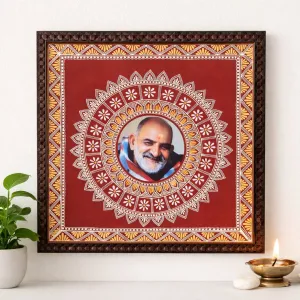
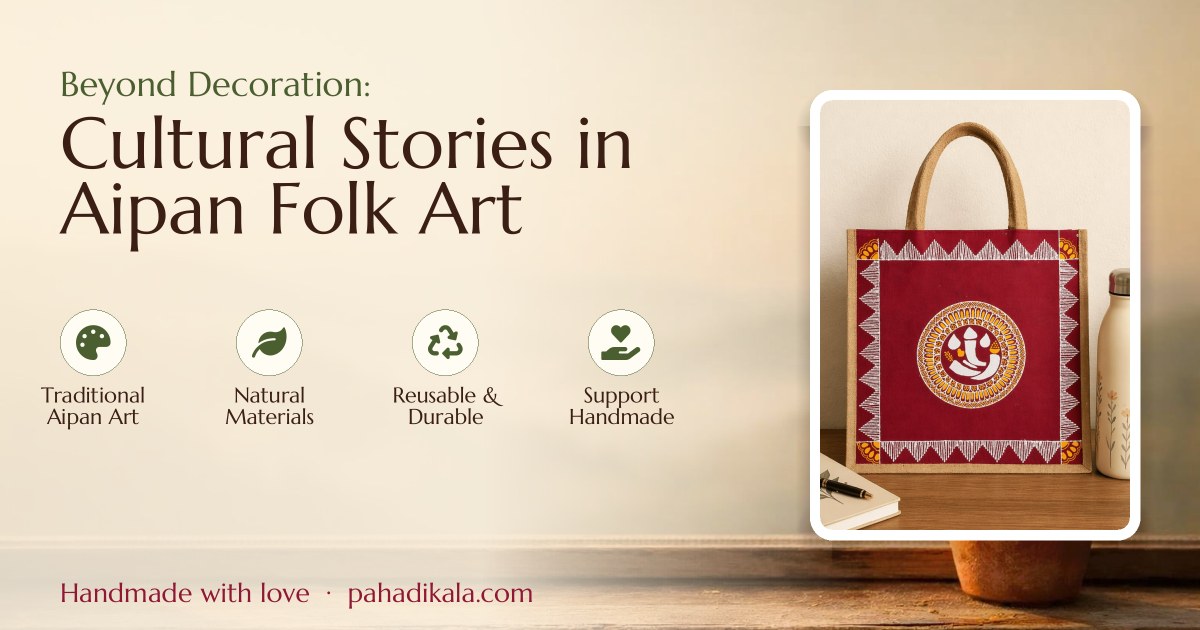
Each motif in Aipan work tends to carry its own meaning, and the pieces in this collection lean into that directly rather than using the style as pure background pattern. The jute tote bag features a Lord Ganesh design, and Ganesh as a figure is widely associated with prosperity, wisdom, and good fortune, which is exactly why his image shows up so often on things meant for new beginnings, gifting, or festive occasions. The Shri Radha glass frame takes a different emotional note, with white motifs on a maroon background meant to reflect devotion and positivity. It's a quieter, more reverent kind of artwork, which is probably why it works so well in pooja rooms as well as living spaces.
Then there's the goddess wall art frame done in red and white, showing a divine feminine form through intricate patterning. Folk art across India has long used the feminine form to represent different ideas, strength, protection, abundance, depending on the region and tradition, and this piece fits into that broader visual habit without needing an elaborate backstory to justify its place on a wall. Sometimes a striking design and a clear spiritual association are enough.
The Mandala and the Footprint Design
The 24x24 inch Aipan mandala wall decor is probably the most visually layered piece of the group. It's built around a circular mandala form, which in a lot of Indian art traditions represents wholeness or a kind of cosmic order, surrounded by detailed Aipan motifs and a symbolic footprint design placed right at the center. Footprint symbols show up fairly often in Indian folk and ritual art, generally connected to ideas of welcome, blessing, or presence, though the exact meaning can shift depending on region and household custom. What's consistent here is the intent: this isn't just a geometric pattern for the sake of looking nice, it's meant to be read as something with weight behind it, framed in black to give the busy red and white design a clean, grounded edge.
Shop This Look
 Hand-Painted Aipan Ganesh Art Jute Tote Bag (14×14 Inch) | Eco-Friendly Ethnic Carry Bag
₹349.00
 Shri Radha Traditional Aipan Art Glass Frame – Handmade Wall Hanging
₹1,999.00
 Hand-Painted Goddess Wall Art Frame (Red & White Folk Art)
₹2,699.00
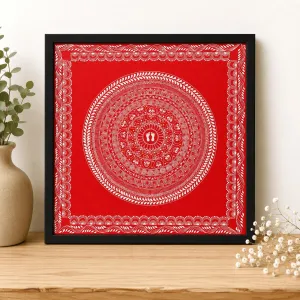 Handmade Aipan Art Mandala Wall Decor with Traditional Footprint Design – 24 × 24 Inch
₹8,999.00
From Wall Frames to Everyday Totes: Folk Art You Actually Use
What's interesting about this particular set of products is that they don't all live in the same part of your home. The wall frames, the Radha piece with its premium glass protection, the goddess art, and the mandala decor are all meant to hang and stay put, in living rooms, bedrooms, entryways, offices, or temple corners. The jute tote bag, on the other hand, is built for daily use. It's made from durable jute, has sturdy handles, and comes in a spacious 14x14 inch square shape that works for shopping trips, office days, or carrying festive gifts. The same Ganesh motif that would feel significant hanging on a wall becomes something you're literally carrying around with you, which is a different kind of relationship with the art. One is contemplative, the other is functional, but both are rooted in the same folk art tradition and the same intent to bring a bit of meaning into something ordinary.
Why These Pieces Work Well as Gifts
A lot of folk art ends up being gifted rather than bought for yourself, and it's easy to see why once you look at the occasions these pieces are suited for: housewarmings, weddings, festivals, corporate gifting, return gifts at ethnic events. There's something about handing someone a piece with a Ganesh or Radha motif that carries more intention than a generic gift would. The artwork does a bit of the talking for you. Whether it's a tote bag someone will use on a regular Tuesday or a framed mandala that goes up in their living room, the folk art connection gives the gift a cultural anchor that a plain object wouldn't have.
None of this needs to be treated as ancient or untouchable to matter. These are handmade pieces made in a style with real cultural roots, used in ways that fit modern homes and modern gifting habits. That combination, old visual language and new everyday use, is probably the simplest answer to why folk art motifs like these keep showing up on walls and in bags generation after generation.