
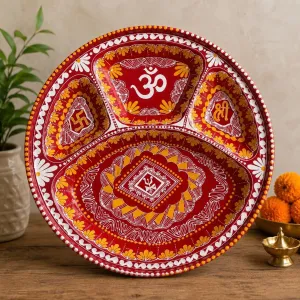
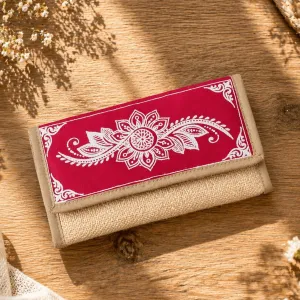






Walk into most Kumaoni or pahadi homes during a festival and you'll notice red before you notice anything else. It shows up on doorframes, on pooja thalis, on the walls themselves. There's something about that color combined with white patterns that just feels right in a home, whether you grew up in the hills or not. This piece is about a few wall decor items that lean into that palette, a couple of carved wooden clocks, a traditional Aipan frame, and a small framed painting, and what actually goes into them.
The Color Red in Traditional Indian and Pahadi Wall Decor
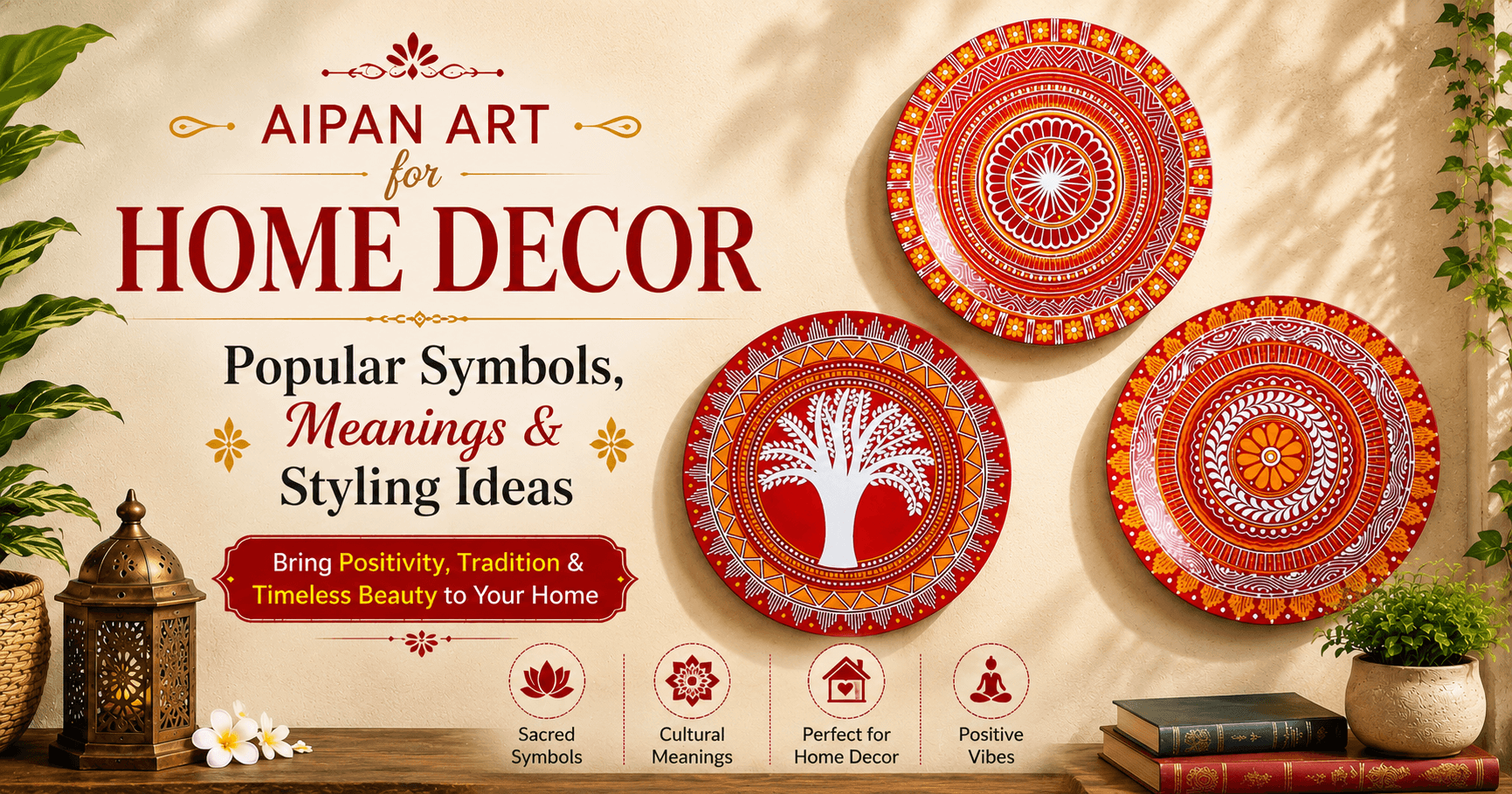
Red and white together show up across a lot of Indian decorative traditions, not just one region. In the Kumaon hills specifically, Aipan art uses exactly this combination, white patterns drawn or painted on a red base. It's the kind of pairing that reads as festive and a little sacred at the same time, which is probably why it ends up near pooja corners and entryways so often. You don't need a mountain home to appreciate it though. The contrast just works on a plain wall, especially in rooms that could use a focal point without going overboard on color everywhere else.
Wooden Wall Clocks With Mandala and Sunburst Carvings
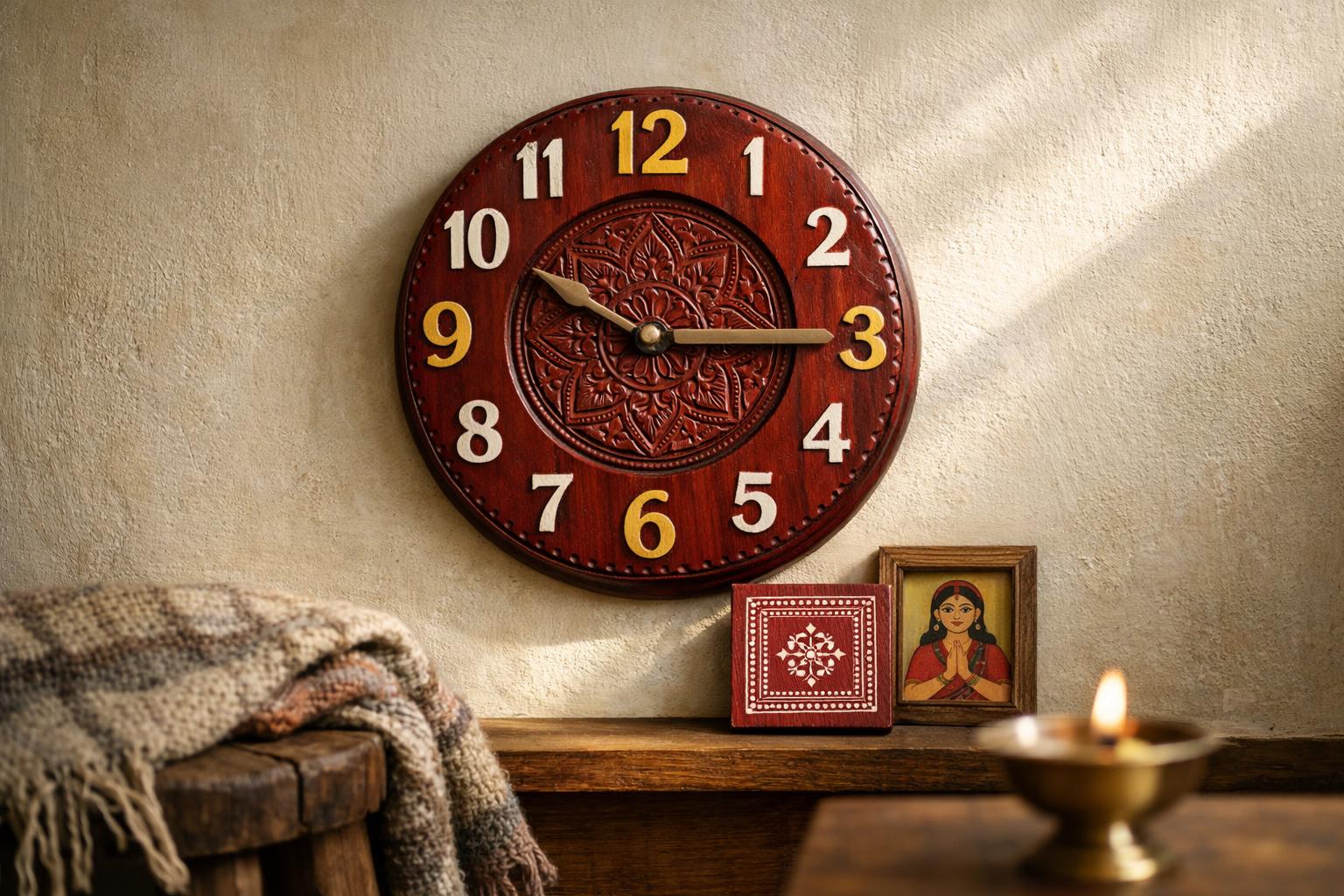
The Royal Red Art Wall Clock is a 20 by 20 cm piece with a mandala design at the center in red, and a carved frame around it done in a sunburst style. The numerals are bold white and the hands are black, so it stays easy to read even from across a room. It's got a durable frame and the movement is silent and smooth, which matters more than people expect once a clock is actually ticking on your wall all day. At 450 grams it's light enough to hang without fuss, and the size makes it suitable for smaller walls, a study nook, a hallway, that kind of spot.
If you want something with more presence, there's the Classic Red Designer Wall Clock at 37 by 37 cm. It's round, red, with white and yellow numerals and a decorative pattern at the center. This one weighs 600 grams and again runs on a silent movement with a sturdy frame. The description calls the design elegant and traditional Indian in style, and honestly that tracks, it's the kind of clock that looks at home in a living room but wouldn't feel out of place in an office either. Between the two sizes, it really comes down to how much wall space you're working with and whether you want the piece to be a quiet accent or the main thing people notice.
Shop This Look


What Makes the Aipan Art Frame Different From the Clocks
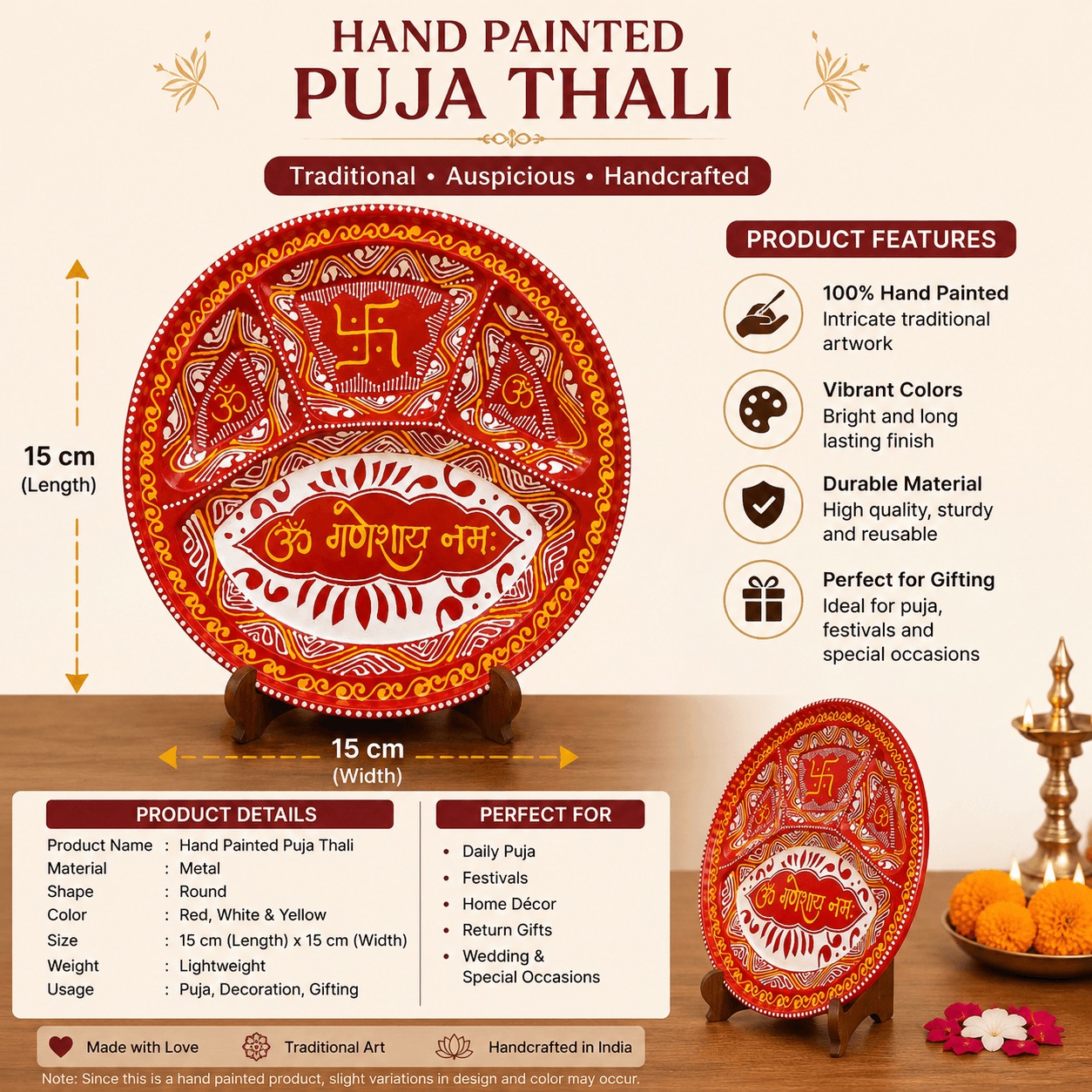
The Handmade Pahadi Aipan Art Frame is a different kind of object altogether. It's a 36 by 25 cm wooden frame with intricate white patterns painted on a vibrant red base, done in the traditional Kumaoni style. Aipan as an art form is generally associated with Kumaoni homes, often connected to pooja spaces and auspicious occasions, and this frame carries that visual language onto a wall piece rather than a floor or doorstep, which is where Aipan is more commonly seen. It weighs about 250 grams and is made of wood. Because of its look and its ties to pooja decor, it fits naturally near a home temple or altar, but it also works as a standalone cultural piece on a wall, or as a gift for someone who'd appreciate the craft behind it.
Small Paintings and the Place They Hold in a Pooja Room
Then there's the Traditional Namaste Lady painting, a compact 15 by 12 cm handcrafted piece showing a woman in the namaste pose, framed by ethnic floral and geometric patterns. It's small, which is actually part of its appeal, it doesn't demand a lot of wall space but still adds something meaningful to a room. The description describes it as radiating peace and devotion, and that's really the mood it's going for, it suits a pooja room or a quiet corner of the living room just as easily. Given its size, it also makes sense as a gift, something you could hand someone without worrying about whether it'll fit their wall.
Bringing These Pieces Together on One Wall
None of these four pieces need to be used in isolation. A red wall clock near an Aipan frame, with a small painting tucked to the side, builds a corner that feels intentional without looking cluttered. The two clocks differ enough in size and detail that one could anchor a larger wall while the other sits somewhere smaller, like a passage or a home office. The Aipan frame and the Namaste painting both lean more spiritual in tone, so they pair naturally near each other, maybe close to where you keep your pooja items. What ties all four together isn't a single story or a shared history, it's really just that red and white palette and the sense of craft that comes through in the carving, the painting, and the patterns. For anyone trying to bring a bit of pahadi and Indian traditional character into a home, these are small, manageable ways to do it, one wall at a time.